



The population collapse is global. Over 80% of the world population is in countries with declining populations or where births have dropped below replacement. Even India and Bangladesh have dropped below replacement. Once a country drops below replacement then it is about two to four decades from population decline.
We have a connected world economy. The collapse of a globally important bank can trigger a global financial crisis. 9 of the World’s top 15 global systemically important banks are Chinese, Japanese or European. The population collapse is not their problem alone. If it triggers major banking implosions, global recession or permanent global depression, then people will say hey that mattered. The mortgage and banking crisis of 2008 would be small and minor relative to losing one of the top 15 banks. Losing 9 of the banks would be a financial catastrophe.

Japan’s population peaked around 2010 at 128.1 million people. The population has declined to 123 million. However, the decline is accelerating, and by 2050, Japan’s population is expected to fall to 106 million, and by 2100, to 75 million.
China’s overall population could start dropping by 15 million people each year as early as 2033.

According to projections, the number of people aged 60 and above will exceed 300 million in 2024, 500 million in 2048, and reach a peak of 524 million in 2052, and the number of people aged 65 and above is expected to exceed 300 million in 2033, exceed 400 million in 2050, and reach a peak of 436 million in 2057. Census 2020, the number of urban elderly exceeded that of rural areas. The number of rural elderly is still growing, and the proportion of the elderly population is 8% points higher than that of urban areas.
It will take about 15 years for China median age to get up to Japan’s 48.
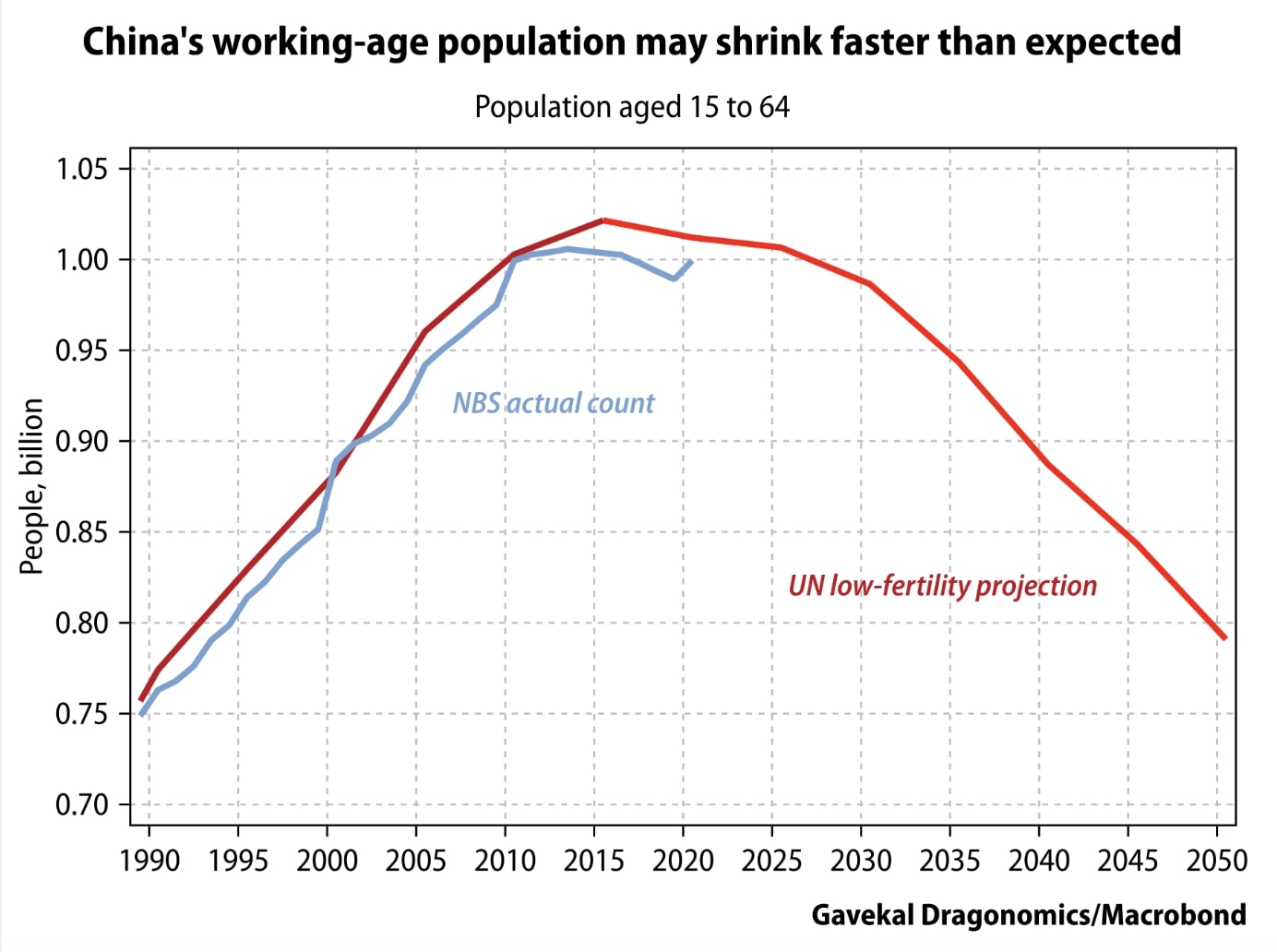
China’s economy is under pressure as its population declines and gets old. The number of seniors who age out of the workforce is already huge. The working age population could drop by 250 million by 2050.
Slightly over 9 million babies were born in 2023 – the lowest level since records began in 1949 – while about 11 million people died, pushing the death rate to a five-decade high.
The falling number of new babies resulted in the lowest birth rate in over seven decades, with 6.39 births for every 1,000 people compared with 6.77 in 2022.
China’s overall population is set to see steeper decline in the coming years, said professor Peng Xizhe from the Centre for Population and Development Policy Studies at Fudan University.
China is crazy to believe population of over 1 billion by 2100. This would only be the case if birthrates increased a lot and extreme antiaging science was developed.