


Large parts of Australia are currently in the grip of a heat wave, and climate change means we’re in for more frequent and intense heat events into the future.
We know extreme heat can pose health risks, especially for vulnerable groups. But increasingly, research is highlighting a relationship between hot temperatures and violence.
Our team analyzed close to one million reported incidents of domestic, non-domestic and sexual assaults over a 13 year period (2006-2018) in New South Wales. We examined trends related to season, temperature, and where the incidents occurred (inside or outside).
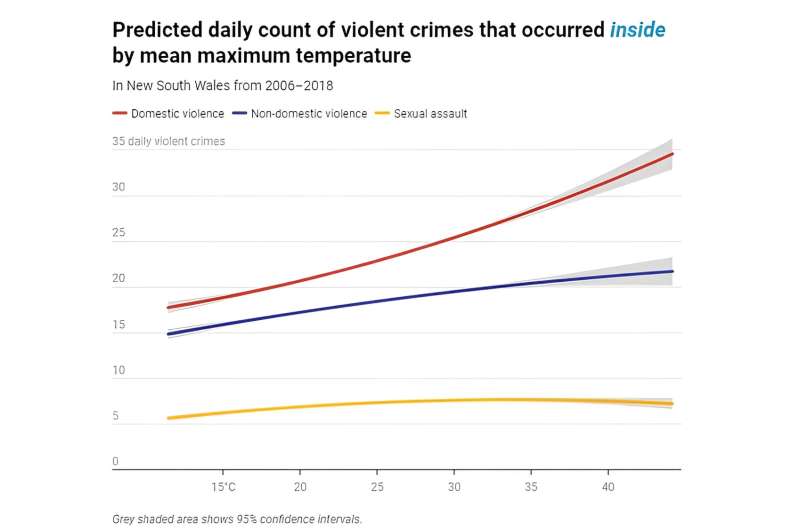
We found violence increased with warmer weather. But the effect of heat was greater on domestic violence than other types of violent crime. The reasons, and solutions, are complex.
Hot weather, hot tempers
Rates of assault were higher in summer than in winter in most areas, except for a few places with snow tourism. Overall, domestic, non-domestic and sexual violence rose as temperatures increased from cool to warm.
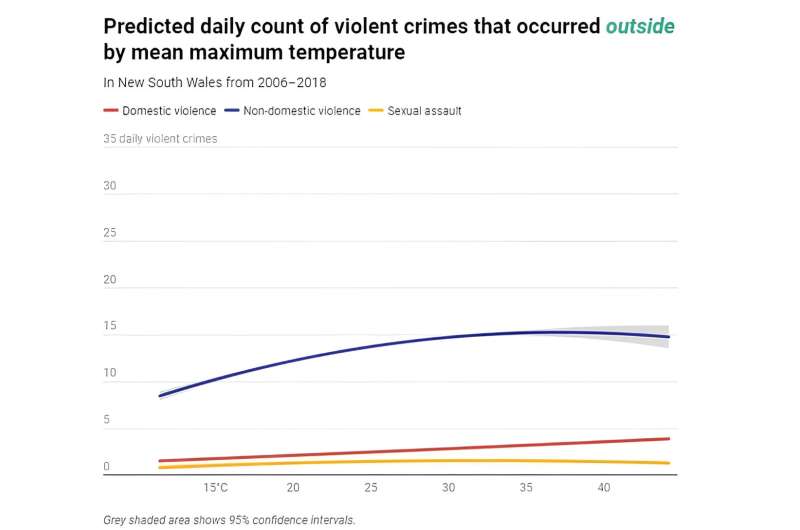
On extreme heat days, non-domestic assaults outdoors declined, potentially because people move indoors seeking respite from the heat. However, domestic violence rates continued to increase with temperature, both inside and outside.
Sexual assaults both indoors and outdoors also increased in warm temperatures, but declined or plateaued in hot weather.
Why are violence and hot weather linked?
You’ve probably experienced the uncomfortable effects of hot weather, such as sweating, dehydration, lethargy and restless sleep. These effects can make people feel irritated, which may increase the likelihood of acting more aggressively.
Also, behavioral changes associated with hot weather may create more opportunities and motivation to act aggressively. For example, on warm and longer summer days we may be more likely to go out and socialize or drink more alcohol.
In extreme heat, we may retreat inside if we can, where there’s respite from the sun and potentially air conditioning. Given this, we might expect to see less of an association between violence and hot weather indoors. But our research found this wasn’t generally the case.
Domestic violence is more often experienced by women, at the hands of a family member or partner who they live with. During extreme heat, offenders and victims may not have practical ways to avoid the heat. The house may remain hot without access to air conditioning, or it may be too expensive to run.
Violence is also often said to occur “behind closed doors“, where there are fewer witnesses to intervene, and potentially more social stressors. As an example, COVID lockdowns were often associated with higher rates of intimate partner abuse.
Credit: The Conversation
One limitation of our study is that we used outdoor ambient air temperature to represent heat exposure,