


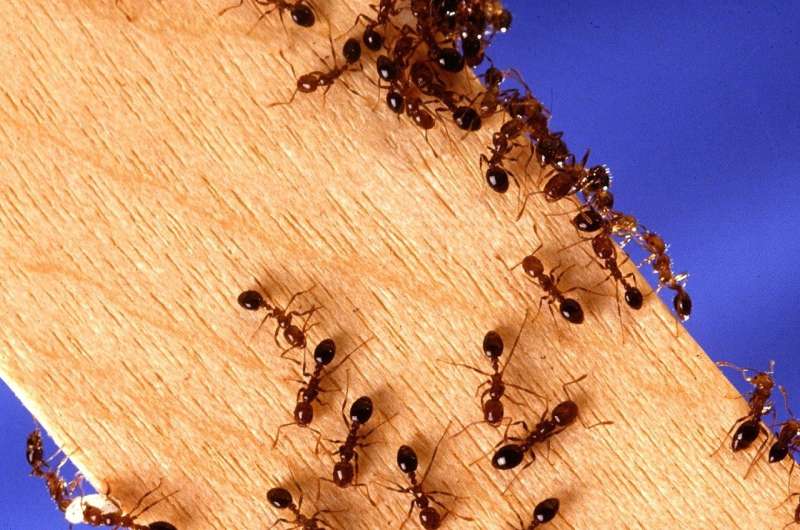
Red imported fire ants are a particularly nasty type of ant because they are aggressive, and inflict painful stings that may be life threatening. That’s in addition to being a serious threat to agriculture and biosecurity.
In recent weeks, we heard these ants had spread from Queensland, south into northern New South Wales.
Although their stings are rare in Australia, they can lead to a serious allergic reaction. Here’s what to do if you’ve been stung.
Which ants are we talking about?
Red imported fire ants (Solenopsis invicta) are native to South America but have been spreading across the world in contaminated soil.
The ants are 2-6 millimeters long and are a dark red-brown color. They live in nests in the ground.
When a nest is disturbed, hundreds of ants come out and attack. Their jaws lock onto the skin, and they arch their body to inject venom through a stinger on their abdomen. Each ant stings an average seven to eight times.
These ants sting millions of people a year in the United States.
Anyone who disturbs their nest is at risk of being stung. Even minor disturbances will cause the ants to surface and attack.
Overseas, people have been stung by ants that have formed rafts during heavy rainfall and flooding.
What happens when this ant stings you?
Fortunately, red imported fire ant stings have been uncommon in Australia, and we hope it stays this way.
Their sting is painful, with a fire-like burning character, and is associated with swelling and redness. Over the following hours or days, sting sites develop blisters or pustules that are itchy and take days to improve.
A person can easily be stung hundreds of times, which can cause a lot of distress.
Here’s what red imported fire ants look like. Credit: Biosecurity Queensland
What’s the treatment? Do I need to go to hospital?
Many people with a smaller number of stings can be safely managed at home. Usual treatments include:
- gently washing the area with soap and water
- using cold compresses on red and swollen stings. If you use an ice pack or ice, avoid direct contact with the skin
- taking antihistamines, which you can buy from your local pharmacy.
Do not break the blisters that form at sting sites, and see your local doctor if the stings become more red and painful a few days later, to exclude infection.
When to seek medical care
Uncommonly, red imported fire ant stings can be life threatening. About 2% of people who are stung develop a severe and life-threatening allergic reaction known as anaphylaxis.