


The Transformation of South Carolina’s Greenville County GOP
In South Carolina’s Greenville County, a significant shift has taken place within the local Republican Party. Following Donald Trump’s defeat in the 2020 presidential election, a group of activists aligned with the MAGA movement orchestrated the removal of established party officials, citing their lack of loyalty to Trump. This group went as far as modifying the party logo, incorporating Trump’s signature golden hair into the traditional red-and-blue elephant emblem. Jeff Davis, now the state executive committeeman for the Greenville County GOP, expressed their mission of instating MAGA and ‘America First’ advocates into leadership roles, heralding a new era for the Republican Party in the region.
The Rise of Trump Supporters in GOP Leadership
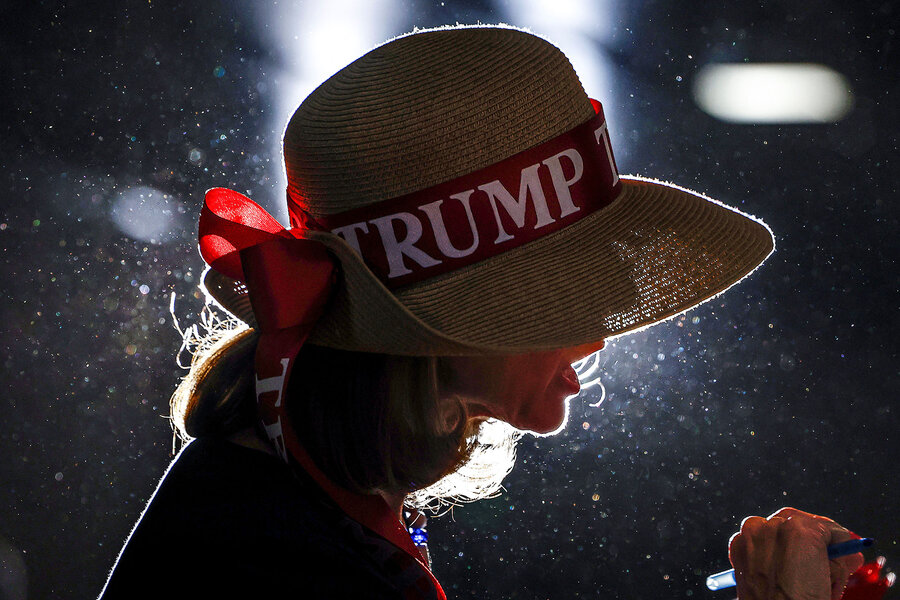
This wave of pro-Trump sentiment permeates beyond Greenville County, with Trump loyalists seizing control of Republican structures at various levels nationwide. Advocates of this movement argue that they are reshaping party entities to align more closely with voter preferences while providing the necessary backing to the former president, who remains a prominent figure in conservative circles. Despite this, detractors voice concerns over the implications of such a singular allegiance to one individual, deeming it potentially antidemocratic. They fear that this approach might sideline candidates not aligned with Trump, redirecting resources away from diverse Republican voices. Furthermore, the sidelining of seasoned party operatives is viewed as a threat to the GOP’s future viability, particularly in crucial areas like fundraising, candidate recruitment, and voter mobilization efforts.
Navigating Party Politics in Greenville County
Nate Leupp, a stalwart within the Republican Party, finds himself at odds with the changing landscape within the Greenville GOP. With a history of service to the party, including roles such as chair of the Greenville County GOP and national delegate for Trump during the 2016 and 2020 conventions, Leupp now perceives a radical shift in the party’s trajectory. He highlights how a group of previously unknown activists, operating under the banner of mySCGOP, ousted longstanding party figures deemed insufficiently supportive of Trump post-election. The revamped party logo, featuring Trump’s iconic hairstyle, serves as a visual representation of this ideological realignment.
The Dichotomy Within the GOP
As the divide within the Greenville County GOP widens, Leupp reflects on the irony of being labeled a ”Republican in name only” by newcomers who prioritize loyalty to Trump over party affiliation. The resurgence of “MAGA” as a defining identity within the party has led to internal discord, with some members distancing themselves from the traditional Republican label in favor of a more Trump-centric allegiance. This shift signals a broader transformation within the GOP, where loyalty to Trump emerges as a defining factor in party dynamics.
In conclusion, the evolution of the Greenville County GOP encapsulates the broader narrative of ideological realignment and power struggles within the Republican Party. As Trump loyalists assert their influence on party structures, the traditional GOP faces a reckoning, navigating the tension between embracing a new wave of grassroots activism and preserving the party’s long-term viability. The future of the Republican Party hinges on its ability to reconcile diverse ideological currents and adapt to changing political landscapes effectively.