

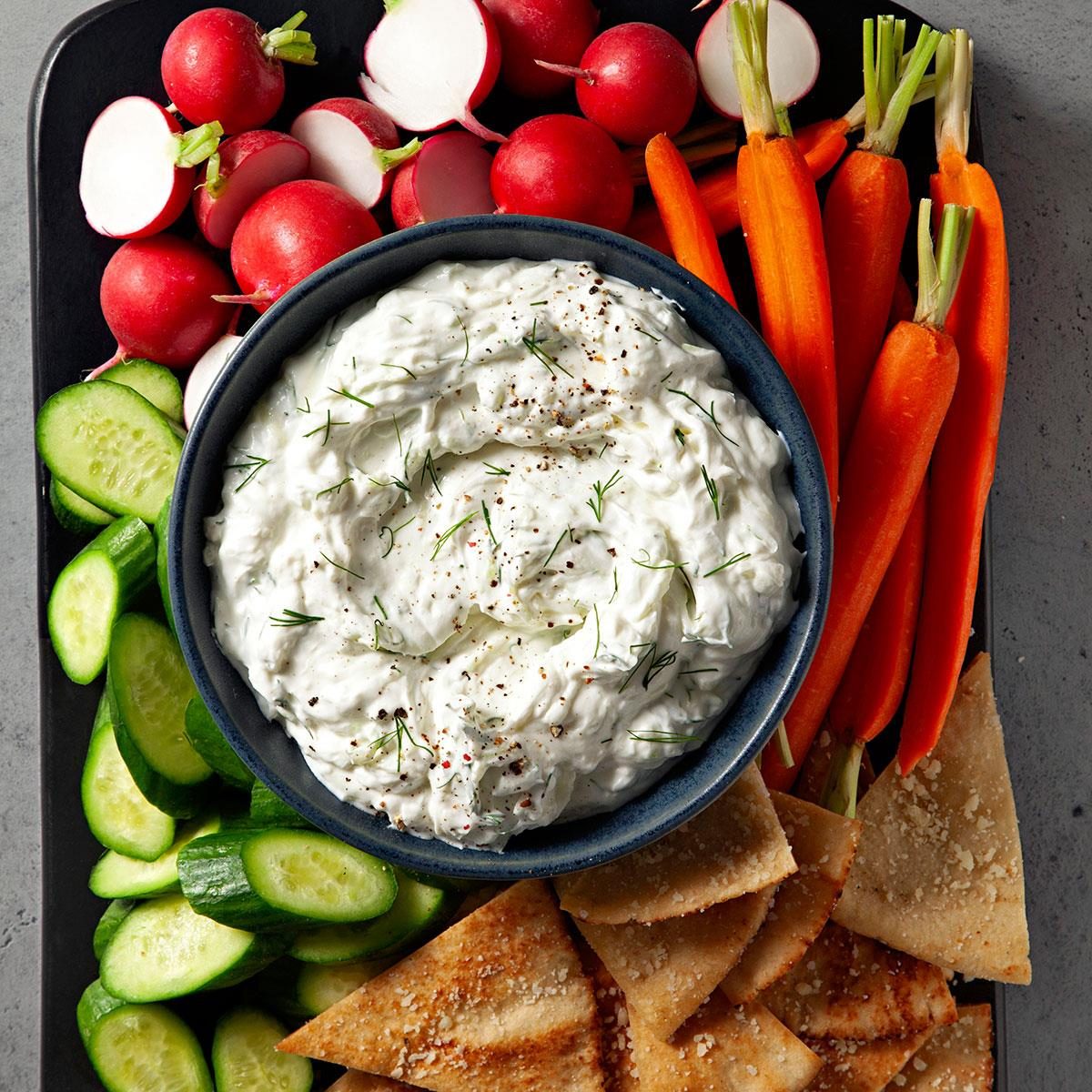

Once upon a time, I was a young and unadventurous eater who didn’t want to try anything new. One day, I decided to try my first gyro. Had I known what the tzatziki sauce was, I’m sure I would have politely declined it. Instead, naively thinking that the white sauce was ranch dressing, I asked for double the normal amount. I realized my mistake at the first bite, but to my surprise I wasn’t upset about it. The sauce was creamy, herbaceous, bright and refreshing. It caught my attention, and it’s held it ever since.
Today, I think this is the best tzatziki recipe to use throughout the summertime. It’s there for me when I need a creamy dip for pita bread or an all-purpose sauce for grilled meat and vegetables. I honestly can’t imagine my life without it!
What is tzatziki?
Tzatziki is a sauce made with yogurt, salted cucumber, olive oil, lemon juice, garlic and fresh herbs like dill or mint. It’s a staple of Greek cuisine and you’ll find it served alongside many Mediterranean recipes, like kabobs and gyros. Traditional tzatziki is made with goat or sheep’s milk yogurt, but we use full-fat Greek yogurt because it’s easier to find at the grocery store—and because the sauce is just as delicious.
How to Make Tzatziki Sauce
This tzatziki recipe requires a little planning, but the process is straightforward. We’ll get into the full step-by-step instructions in a minute, but here’s a basic overview of the steps.
- Strain the yogurt: You’ll want to do this at least four hours ahead of time. Straining removes some of the whey (the liquid on top of yogurt) that would otherwise make tzatziki watery. This step is the key to creating a tzatziki sauce that’s thick and creamy.
- Salt the cucumber: Salt draws out excess moisture, concentrating the cucumber’s sweetness and ensuring the tzatziki won’t turn out watery.
- Bring it all together: Once everything’s stirred together, you can serve tzatziki right away, or let it chill in the refrigerator for later.
Tzatziki Ingredients
- Greek yogurt: Greek yogurt has the same ingredients as regular yogurt, but it’s strained until it becomes thick and tangy. You can substitute regular yogurt for this recipe, but the sauce will be thinner and less creamy.
- Cucumber: We like English cucumbers for this tzatziki recipe. The seeds are small and edible, so you don’t have to remove them. If you use another type of cucumber, cut it in half and scoop out the seeds with a spoon.
- Olive oil: The fat in olive oil enriches the yogurt to give the sauce a rich finish.
- White vinegar: You don’t have to add vinegar to tzatziki, but we like how it perks up the sauce with a bright acidity.
- Fresh dill, lemon juice and garlic: These ingredients add flavor, giving tzatziki a perfect balance of herby,