

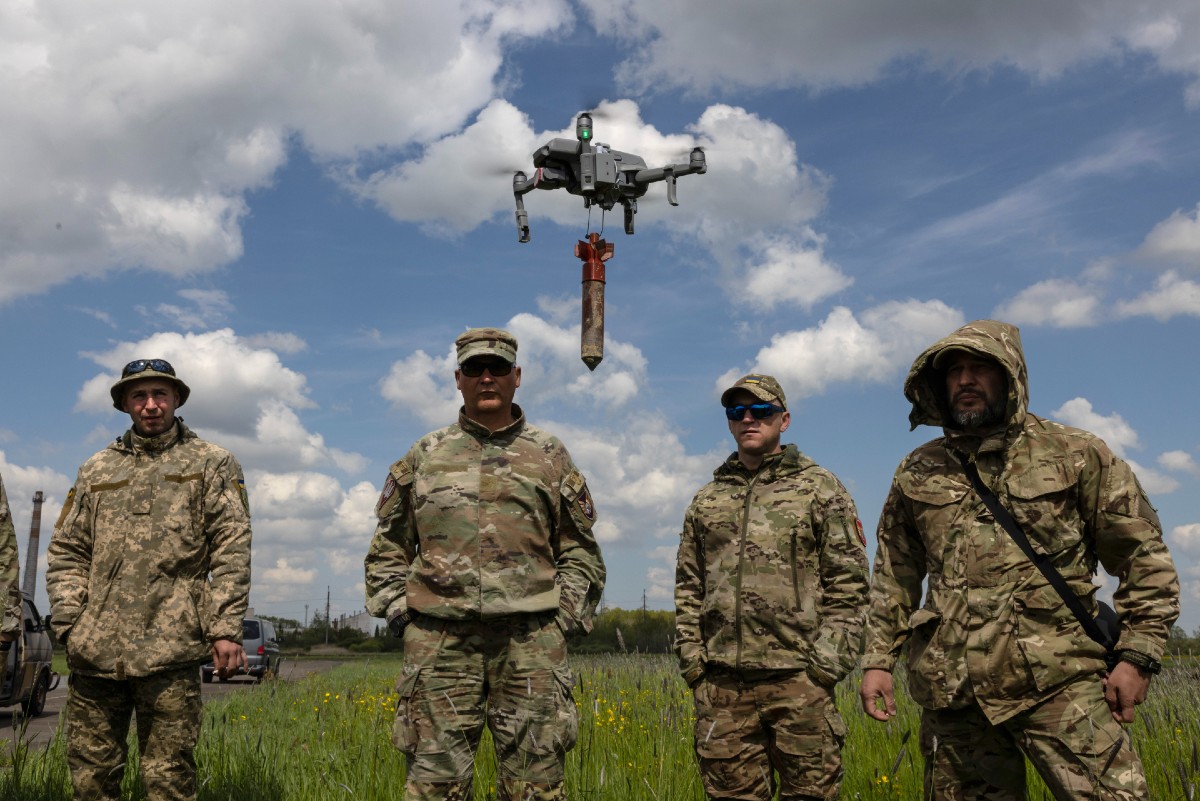

As Russia continues to invest heavily in deploying more and more uncrewed vehicles in Ukraine, Kyiv is determined to maintain its long-standing advantage in the intense drone warfare, which is fast approaching its 2-year anniversary.
Ukraine is vigilantly monitoring Russia’s progress in drone development and the substantial resources it is allocating to unmanned vehicles, according to Mykhailo Fedorov, Kyiv’s minister of digital transformation, who is leading the drone efforts against Moscow, in an interview with Newsweek.
Kyiv has adopted a multifaceted approach, acquiring tens of thousands of first-person-view (FPV) drones, developing interceptor drones, expanding its defenses against Russian loitering munitions, and increasing domestic UAV (unmanned aerial vehicle) production.
“The drone situation constantly impacts the front line,” Fedorov explained. “This is a 24/7 conflict.”
The city has conducted a series of fundraisers to finance its expansive drone plans, including the two “Operation Unity” campaigns initiated by the United24 platform, the Ukraine-based Come Back Alive Foundation, and Monobank. The initial campaign raised around $6.3 million in August to purchase 10,000 first-person-view attack drones, many of which are already in use on the front lines.
A second round of fundraising for Operation Unity earlier this month took just three days to raise enough money for 5,000 more FPV drones. An estimated 224,059 donors from Ukraine and 59 other countries contributed to the drive, “for a New Year’s fireworks show for Ukraine’s enemies,” United24 announced.
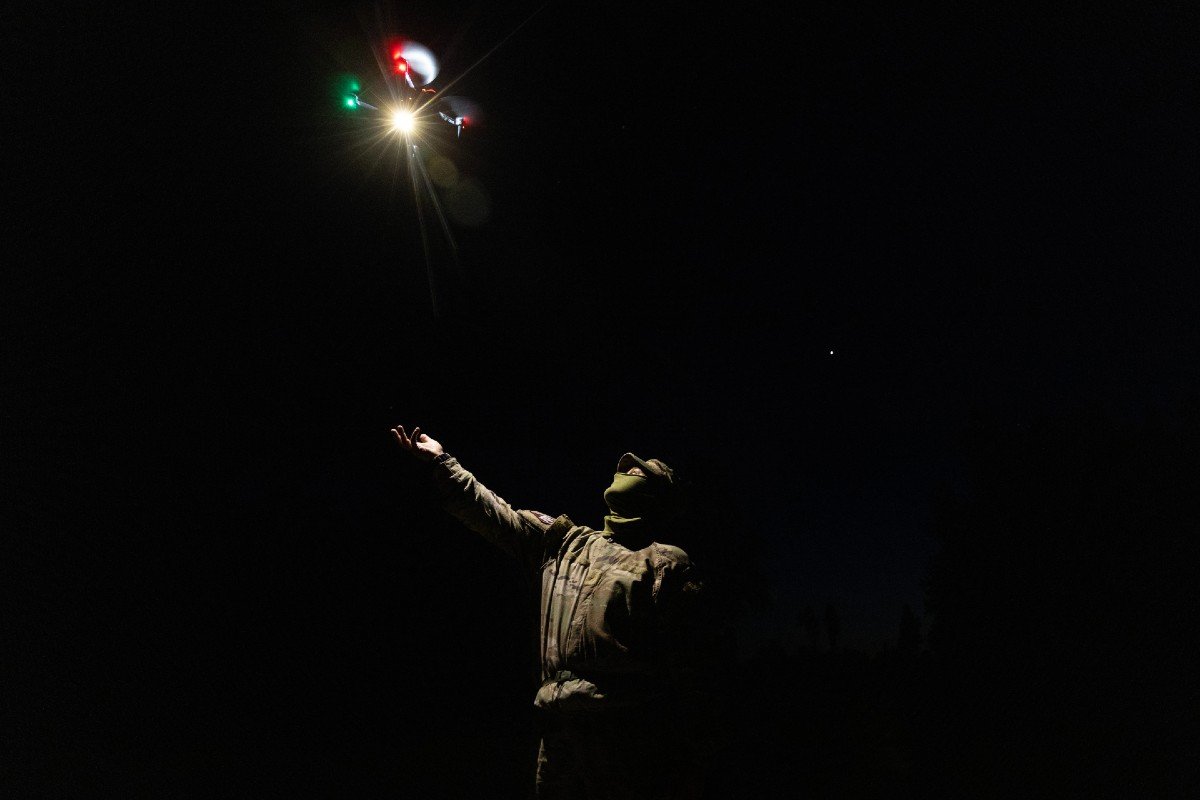
Ukrainian soldiers are training to operate drones at night using thermal vision in the western Lviv region on May 11, 2023. “The front line situation depends on drones,” stated Mykhailo Fedorov, Ukrainian Minister of Digital Transformation, adding, “This is a 24/7 war,” in an interview with Newsweek.
The funds will be used to purchase 3,000 FPV drones equipped with thermal cameras, as well as 2,000 additional drones with daytime cameras, with a range of up to 22 kilometers, or just over 13 miles. An initial batch of 3,000 drones will arrive in Ukraine shortly after the new year, with a second batch following in February 2024.
Kyiv has also initiated a separate fundraiser to protect the country’s cities and infrastructure from Russia’s infamous Shahed kamikaze drones.
All this is being done while fully aware that Russia is attempting to catch up with Ukraine’s initial dominance in UAVs.
Moscow possesses certain types of drones that Ukraine does not yet have, Fedorov told Newsweek, and added, “They have more money” to invest in the development and production of large quantities of drones.
“It’s challenging to compete with Russia in terms of quantity,” he acknowledged, although Ukraine scrutinizes the drone war’s progress “on a daily basis.” He noted that much depends on how quickly Kyiv can implement design changes to its battlefield drones.
Russia has “significantly ramped up” its production of FPV drones, similar to those purchased by Ukraine through its fundraisers, according to Samuel Bendett of the Center for Naval Analyses, a U.S.