


The UN said that Sudan’s Umm Baru is experiencing one of the worst levels of hunger recorded by its assessments.
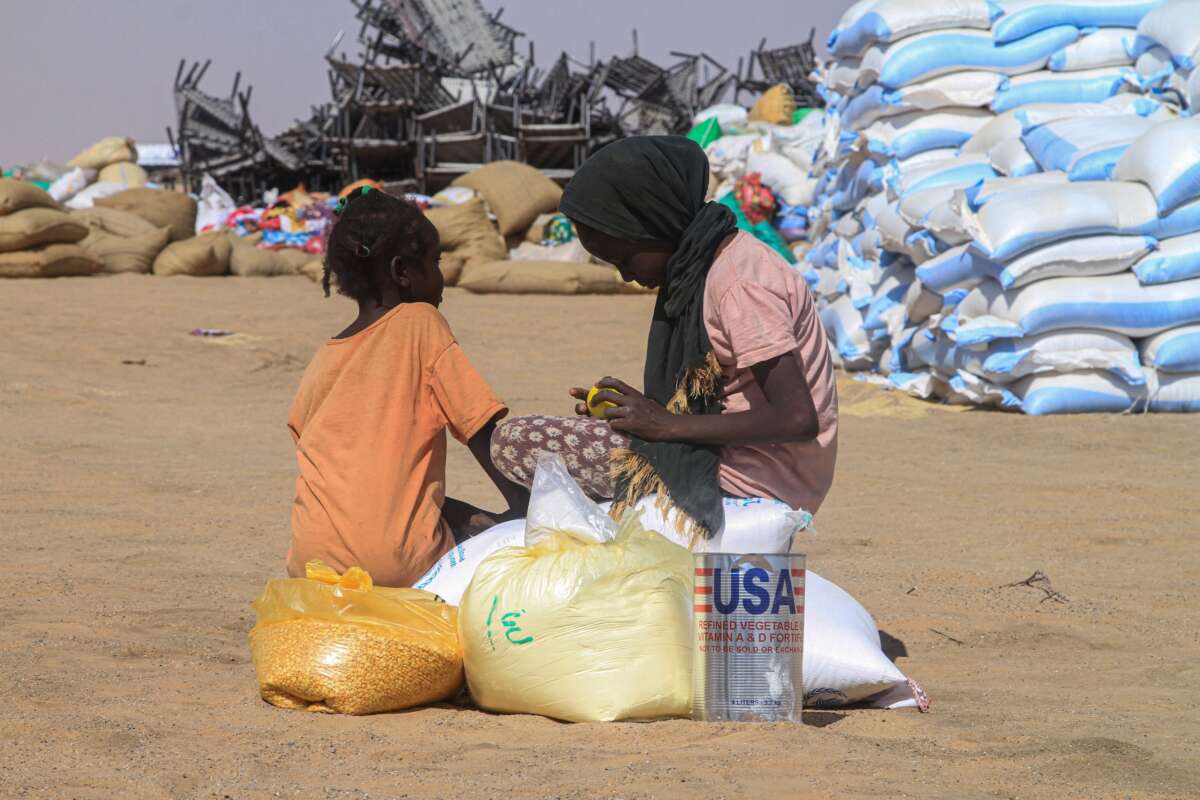 Sudanese girls who fled El-Fasher receive humanitarian aid at the Al-Afad camp for displaced people in the town of Al-Dabba, northern Sudan, on November 25, 2025.Ebrahim HAMID / AFP via Getty Images
The UN has recorded “unprecedented” levels of hunger in Sudan after a survey in a North Darfur locality revealed over half of children under 5 years old are suffering from acute malnourishment, with many on the brink of death.
A UNICEF nutrition survey released this week found that 53 percent of children under 5 in North Darfur’s Umm Baru locality are acutely malnourished.
Further, one in six children under 5 are suffering from severe acute malnutrition, “a life-threatening condition that can kill a child in weeks if left untreated,” the group noted.
It is one of the worst levels of hunger ever recorded in a UN emergency hunger assessment, at more than three times the World Health Organization’s emergency threshold of 15 percent.
“When severe acute malnutrition reaches this level, time becomes the most critical factor,” said UNICEF Executive Director Catherine Russell in a statement. “Children in Umm Baru are fighting for their lives and need immediate help. Every day without safe and unhindered access increases the risk of children growing weaker and more death and suffering from causes that are entirely preventable.”
The survey is a reflection of the conditions in a region most affected by the fighting in Sudan’s brutal civil war. UNICEF noted that North Darfur is “the epicentre” of Sudan’s starvation crisis, and that the state had seen 85,000 children admitted for severe malnourishment in November alone.
Many people in Umm Baru are among those who fled from el-Fasher amid the Rapid Support Forces’s (RSF) brutal takeover of the city in October, the UN says.
International authorities first declared a famine in North Darfur last year, in Zamzam displacement camp. Since then, the famine has spread, with UN-backed researchers making famine declarations in Darfur’s Kadugli and el-Fasher last month.
Researchers are still uncovering the extent of the devastation from the RSF’s massacre in el-Fasher. The UN reported this week that aid workers were able to reach el-Fasher for just a few hours, the first time since the siege. The workers found the once-bustling city largely deserted, a “crime scene,” save for a few people sheltering in buildings or under plastic sheets, per Reuters.
Aid groups have estimated that over 100,000 people fled el-Fasher as a result of the siege, or over a third of the former population of 260,000. Experts at the Yale University Humanitarian Research Lab have said that satellite imagery shows the city was turned into a “slaughterhouse,” and British lawmakers said this month that they’ve been told that a “low estimate” of 60,000 people were killed over the course of just a few weeks during and following the takeover.