


Examining Changes in US Air Pollution Composition
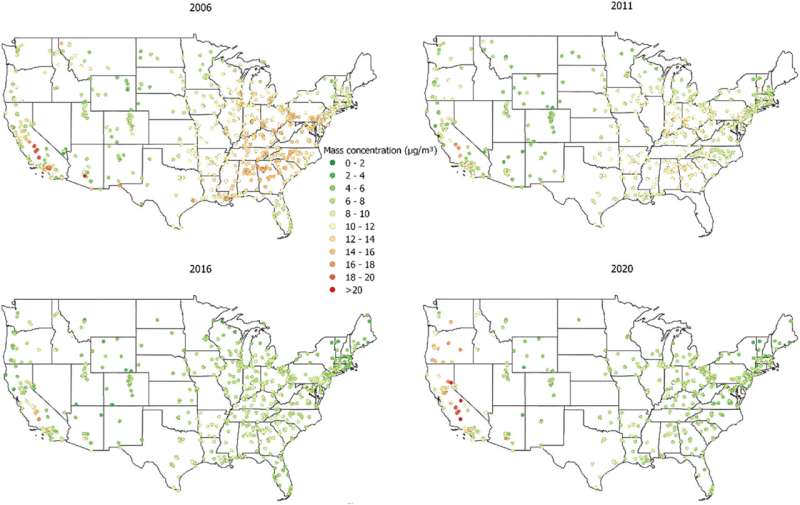
A recent report released in Atmospheric Environment by scientists at the University of North Carolina at Chapel Hill has investigated the spatial and temporal patterns of fine particulate matter (PM2.5) in the contiguous United States from 2006 to 2020. The analysis aims to monitor the effectiveness of regulatory measures implemented by government entities at various levels to combat air pollution.
Shifting Trends in Air Pollution
Despite a considerable decrease in the average yearly concentration of PM2.5, the chemical makeup of the pollutant underwent alterations over the study period. Researchers suggest that tailored approaches targeting specific pollutants based on regional variations in the US could lead to a more substantial reduction in overall air pollution levels and associated health risks linked to PM2.5.
PM2.5, a contaminant present in the atmosphere, comprises a combination of diverse chemical elements and consists of minute particles smaller than 2.5 microns. Studies have connected PM2.5 exposure to various adverse health consequences, including premature mortality and reduced visibility due to atmospheric haze.
Saravanan Arunachalam, the study’s senior author and deputy director of the UNC Institute for the Environment, emphasized the relevance of the findings in light of the recent revision by the EPA, which lowered the health-based standard for PM2.5. The adjustment underscores the importance of comprehending the chemical constituents of PM2.5 and their evolution over time to formulate effective emission reduction policies.
Utilizing data from the U.S. EPA Air Quality System, the research team assessed trends across the contiguous US. Constituents of PM2.5 in the US include sulfate, ammonium, nitrate, organic carbon, elemental carbon, and other trace elements originating from both human-made and natural sources.
Impactful Observations
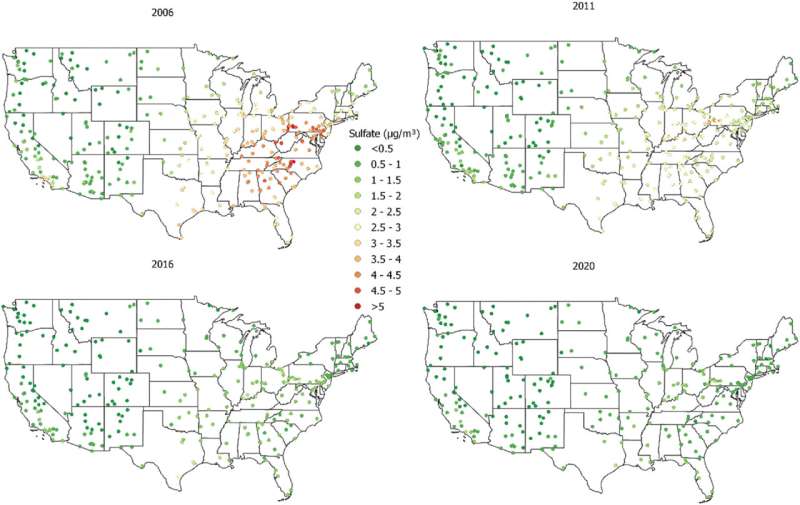
Significant improvements in air quality during the analyzed 15-year span were most prominent in regions with initially poor air conditions. For instance, the Ohio Valley and southeastern states displayed substantial enhancements attributed to stringent regulations targeting emissions from sources like coal-fired power plants and industrial activities.
The study noted a 91.5% reduction in sulfur dioxide emissions from power plants, a byproduct of fossil fuel combustion. The majority of sulfur dioxide emissions in the research stemmed from the Ohio Valley and southeastern US. An uptick in air pollution severity along the West Coast in 2020 was likely linked to widespread forest fires.
Future Directions in Air Quality Enhancement
While sulfate and ammonium levels have shown a decline nationwide, researchers advocate for addressing other forms of carbon emissions to further ameliorate air quality given their growing contribution to total PM2.5 levels.