


Haiti’s Patriotic Congress for National Rescue, launched by the academic community and civil society organizations, recently held a nearly month-long period of consultations across Haiti and its diaspora over the worsening crisis in the Caribbean nation.
It concluded on June 27 with 25 proposals on three points: 19 on the security crisis and six on reforms to public governance and endless transitions.
While these three points are key for a national rescue and are interconnected, they don’t carry the same weight. Based on the number of proposals, the security crisis takes priority over governance reforms and endless power transitions.
As a public policy and administration expert, I believe governance reforms are crucial because Haiti’s insecurity, lawlessness and constant political transitions are rooted in poor governance and corruption.
Corruption at the core
Excessive corruption is the cancer that eats away at Haiti. It hinders private investment, slows the production of goods and services, and triggers social unrest, criminal activity and poverty. It’s the root cause of the Haitian crisis, not the symptom.
In his book The Great Escape: Health, Wealth, and the Origins of Inequality, British-American economist and Nobel laureate Angus Deaton argues that a well-functioning national government is what allows people to escape misery.
His views echo a study by researchers from the International Monetary Fund and the World Bank that found an increase in corruption significantly reduces the income growth of impoverished people.
This research clearly illustrates that it’s not poverty that breeds corruption, but rather the reverse. In other words, to truly tackle poverty, we must go to the source of the problem and tackle corruption.
I’ve made the same argument in my self-published book Contemporary Events Related to Equity and Inclusion: A focus on Blacks, the Haitian diaspora, and locals.
It’s clear, therefore, that most of the recommendations from the Patriotic Congress should focus on bad governance and corruption.
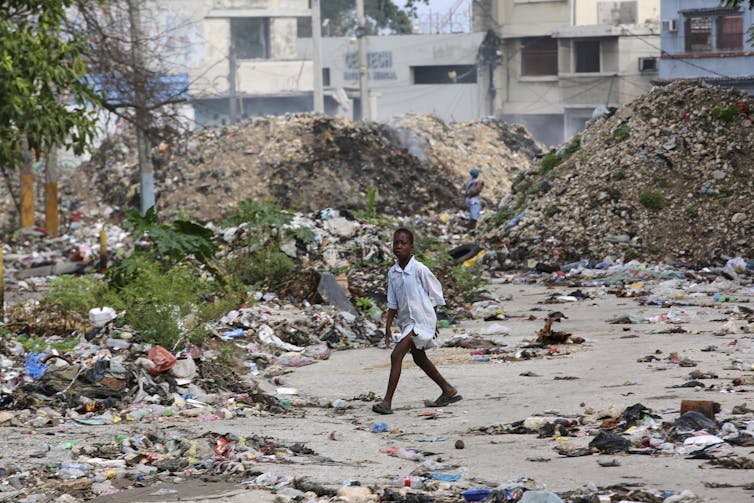
A youth crosses a street full of garbage in downtown Port-au-Prince, Haiti, on Aug. 18, 2025.
(AP Photo/Odelyn Joseph)
Up close and personal with Haitian corruption
Corruption is the norm in Haiti, not the exception. It is rooted in the country’s institutions and remains systemic. The US$2 billion Petro Caribe scandal is a major case in point.
Well-intended investors trying to do business in Haiti often face myriad corrupt officials. I have personal experience with this phenomenon.

President Jovenel Moïse speaks during a news conference in Port-au-Prince, Haiti, in October 2019.
(AP Photo/Rebecca Blackwell)
I launched a company in Haiti, Biogaz pour une Solution Intégrée, with some well-meaning classmates and colleagues who specialize in the science of soil management and crop production.
When founding and presiding over the business, we’d hoped for political stability due to the election of President Jovenel Moïse in 2017.
Instead, we faced unscrupulous offers,