


Hodoimg/Shutterstock
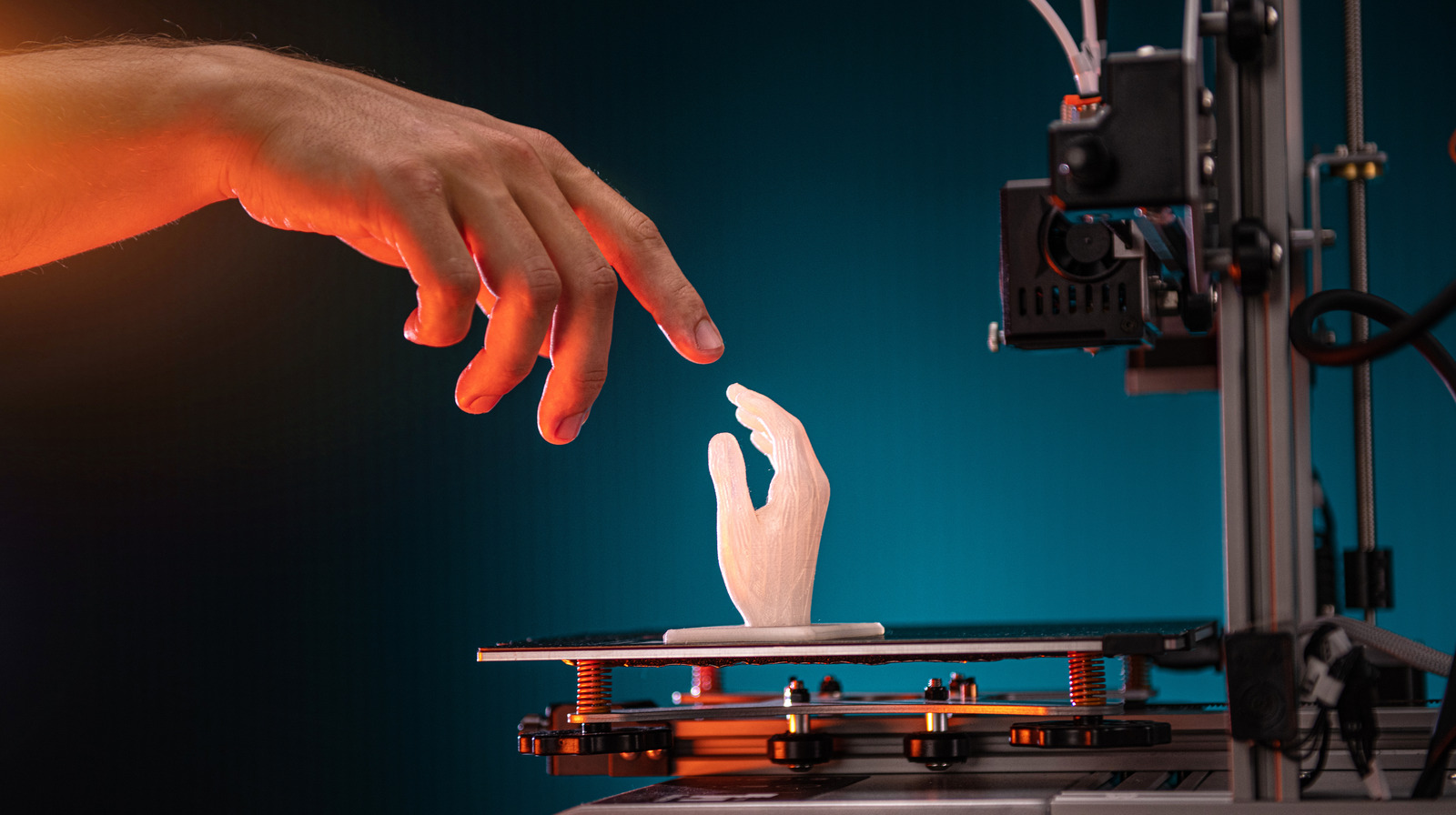
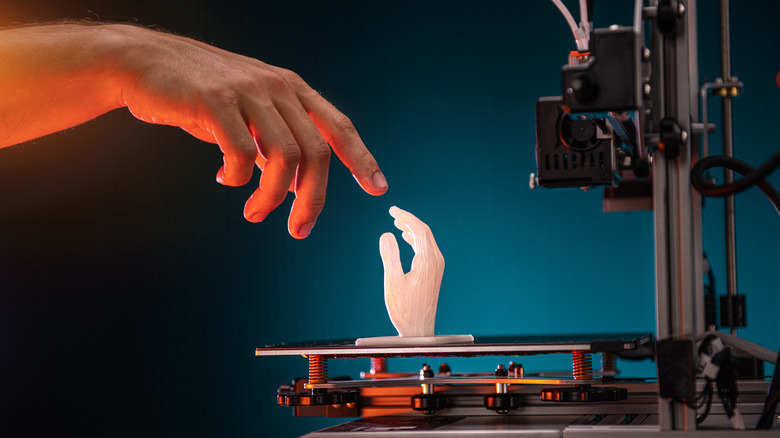
One of the coolest dreams of a science-fiction future is the ability to create something out of nothing. Imagine being able to make solid, stable objects out of thin air. If we could do that, scarcity would be a thing of the past. While we might not be at the “Star Trek” Replicator level just yet, modern manufacturing devices are making huge strides.
3D printing has opened the door for greater flexibility in manufacturing objects of unique shapes and sizes. This breakthrough has also revolutionized the scale at which objects are made. Now, anyone can own a 3D printer and craft their own creations – from simple, small objects to components used in much larger projects. At first glance, it sounds like something out of a sci-fi movie, but once you understand how the different types of 3D printers work, you’ll realize that it’s not as complicated as it may seem.
3D printing in general
Stokkete/Shutterstock
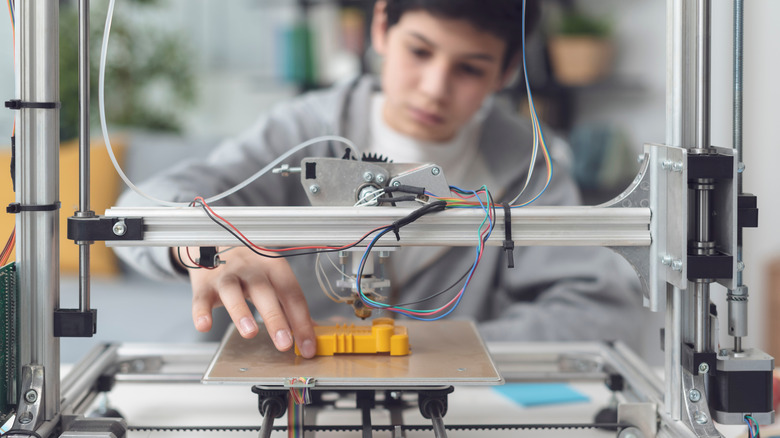
3D printing is a process known as “additive manufacturing.” If you think in terms of manufacturing processes, most of them fall into either subtractive or formative manufacturing. In subtractive manufacturing, a big, solid block of some material is shaved down gradually. Formative manufacturing, on the other hand, happens when the material is shaped directly. Additive manufacturing is the opposite of subtraction – you add or alter the material in layers to create your desired object.
The exact way you add the material, and the material you’re using, depends on the kind of 3D printing device you use.
Fused Deposition Modeling
dpVUE .images/Shutterstock
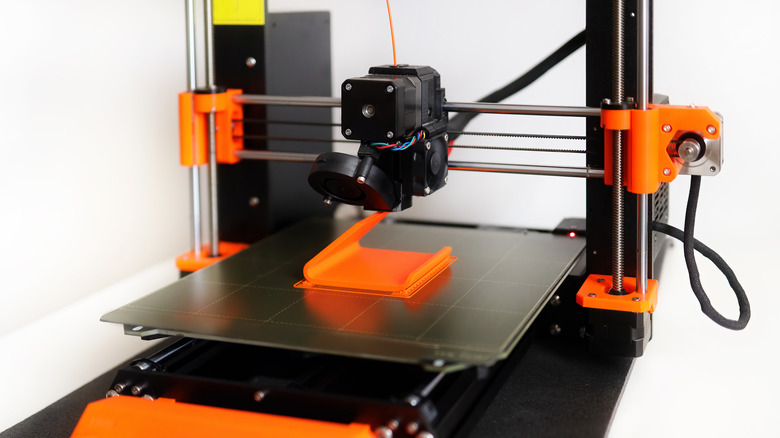
Fused Deposition Modeling, or “FDM,” is one of the most common 3D printer types for user-grade devices. This technology is simple enough to be miniaturized and sold as a home appliance. Here, thermoplastic filament is the key to everything. This filament is a thin strand of specially-made plastic that responds very well to temperature-based sculpting.
The printer takes a filament thread and heats it into a semi-solid state. As it reaches this state, it’s carefully distributed in layers. The printer follows your design specs with precision, creating the object layer by layer. Imagine squeezing icing onto a cake in the shape of a rose – it’s a bit similar, just on a much smaller, more precise scale. The models made by this kind of printer might be a little rough around the edges, but they are a good starting point. There might be visible lines between the layers, but that’s just a small detail.