

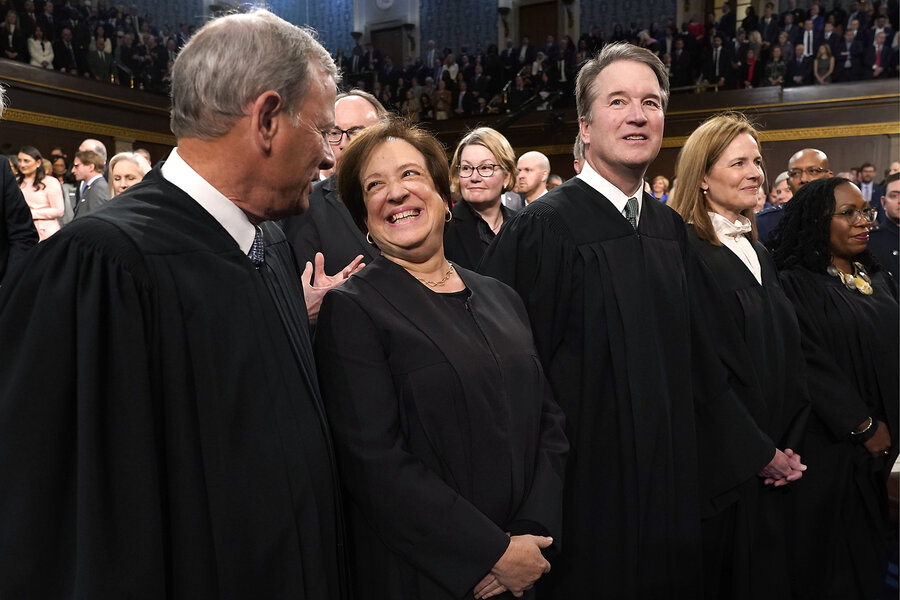

Entering the U.S. Supreme Court chamber tomorrow, the nine justices will face a unique and unprecedented challenge. In a historic turn of events, the Supreme Court is tasked with determining whether the Constitution disqualifies a presidential candidate. The case at hand questions if a provision dating back to the Civil War era prohibits Donald Trump from appearing on the ballot due to his involvement in the events surrounding the attack on the U.S. Capitol on January 6.
Echoing some of the court’s most significant decisions, Trump v. Anderson presents a complex legal issue intertwined with a divisive national concern. The outcome of this case will have immediate and substantial repercussions for the nation, inevitably stirring controversy regardless of the Supreme Court’s ruling.
With its particular focus on an obscure section of the Constitution and the urgency of addressing issues related to a presidential election, Trump v. Anderson will challenge the justices to collaborate effectively as a cohesive judicial body.
The recent track record of the high court reflects its familiarity with making critical and impactful judgments. While past cases have dealt with longstanding legal conflicts involving abortion rights, gun regulations, and affirmative action, the justices have little prior experience in interpreting this specific constitutional provision.
Unlike previous cases where justices had established opinions before oral arguments, the unique nature of Trump v. Anderson leaves room for uncertainty. This deviation from the norm adds an extra layer of complexity to the forthcoming deliberations at the Supreme Court.