


The Proposal for a Massive Deportation Operation in the U.S.
Former President Donald Trump has made it a focal point of his campaign to remove more than 12 million undocumented immigrants currently residing in the United States. While other policy objectives, such as another round of corporate tax reductions, would necessitate congressional approval, Trump and his advisors maintain that he can implement what he calls “the most extensive domestic deportation campaign in history” using powers already available to any president.
Trump’s Immigration Strategy
In an interview with the New York Times, Trump immigration advisor Stephen Miller asserted, “Any individuals who doubt President Trump’s determination are gravely mistaken: Trump will utilize the wide array of federal powers to execute the most remarkable immigration crackdown.” The program could be embraced by a part of the American population, with a recent Gallup poll indicating that 55% of Americans perceive illegal immigration as a “critical threat to the vital interests of the United States.” However, industries reliant on migrant labor for their goods and services, such as agriculture, leisure and hospitality, and construction, might be significantly affected by Trump’s plan.
Challenges Faced by Industries
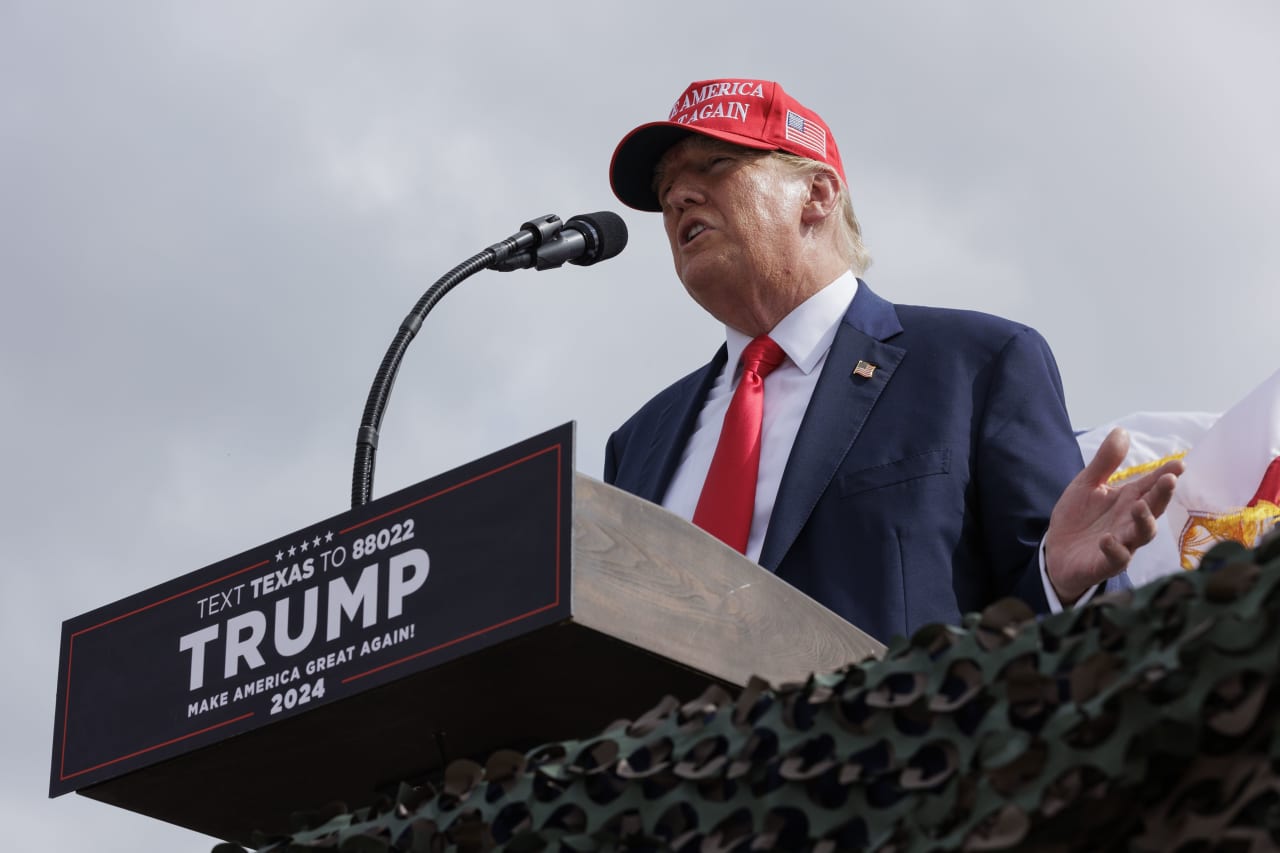
According to Queens College labor economist Francesc Ortega, undocumented laborers make up roughly 10% of the total output in these industries, and their absence could result in a substantial labor shortage. Trump and President Joe Biden have both emphasized the importance of the subject, as evidenced by both delivering speeches and meeting with local officials near the southern border in Texas on Thursday. Trump accused Biden of causing a massive influx of migrants across the southern border, labeling it “a Joe Biden invasion,” while Biden attributed the problem to Trump’s encouragement of congressional Republicans to reject a bipartisan agreement that would have improved border security and expedited asylum claim processing.
The Economic Impact
Steven Camarota, director of research at the Center for Immigration Studies, indicated that there are roughly nine million unauthorized immigrants in the U.S. labor force and estimated that up to one million could be deported annually if current laws were stringently enforced. He suggested that these workers could be substituted by more than seven million working-age men legally in the country but not employed. However, attracting these individuals to fill positions currently occupied by unauthorized immigrants would necessitate higher wages, better working conditions, and more patience from employers.
Analyzing the Situation
The U.S. is currently experiencing a historically low unemployment rate, and the potential implementation of Trump’s deportation plan could have far-reaching consequences, especially for industries heavily reliant on immigrant labor. The proposal, if put into action, could drastically alter the economic landscape and workforce dynamics in the United States.