

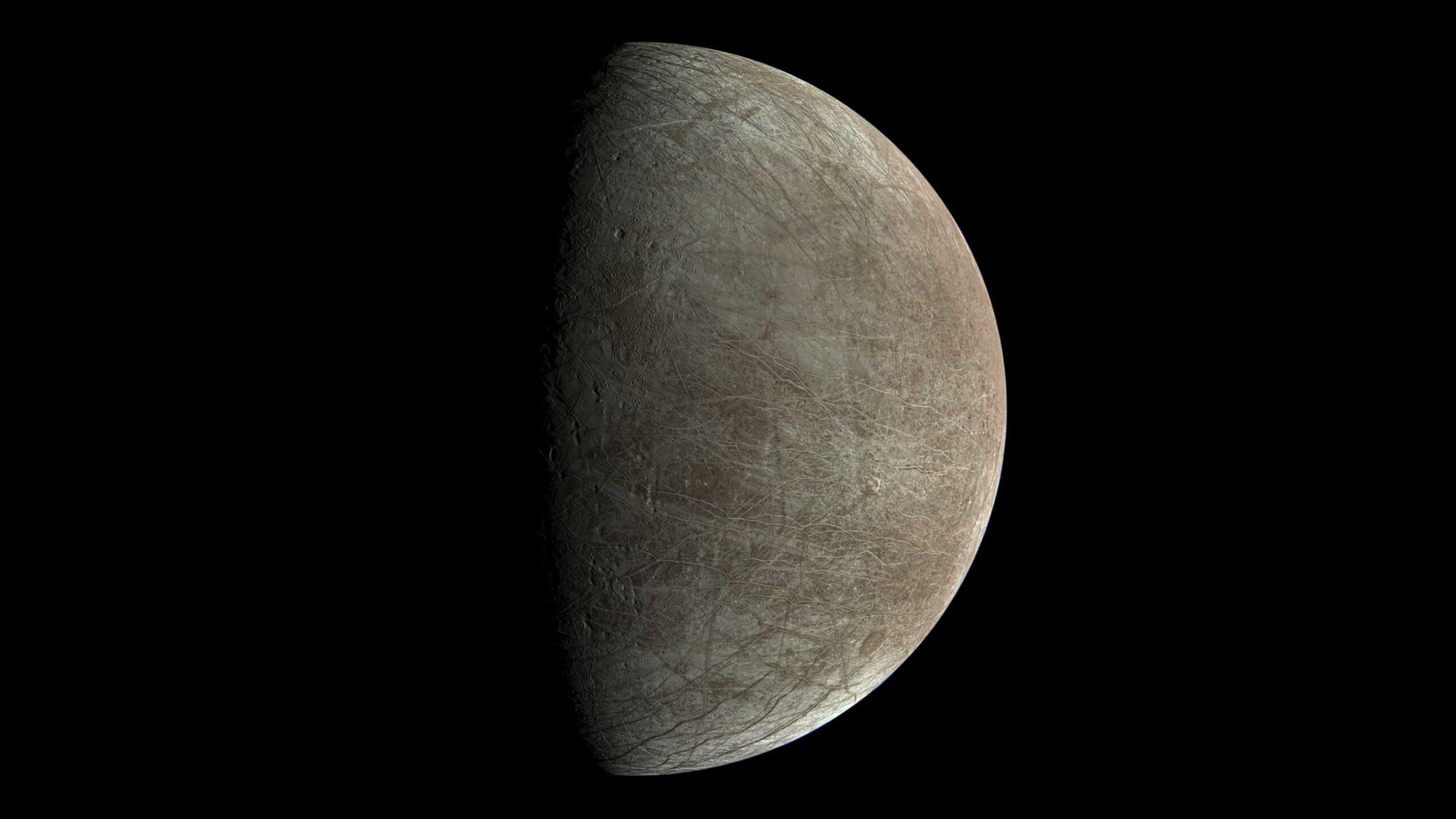

Exploring the Oxygen Content of Europa’s Atmosphere
A recent scientific breakthrough has shed light on the amount of molecular oxygen present around Jupiter’s moon Europa. This discovery marks the first direct measurement of this essential element, offering valuable insights into the moon’s composition.
Initial estimates of Europa’s oxygen content were based on atomic oxygen emissions associated with the moon. However, molecular oxygen, the type we breathe, differs from atomic oxygen, which is not breathable. Despite previous observations and analyses, researchers aimed to pinpoint the exact levels of breathable oxygen surrounding Europa.
The study utilized data collected by NASA’s Juno probe to conduct a direct measurement of Europa’s oxygen content. By delving into the intricacies of ice chemistry, scientists uncovered a fascinating process at play within the moon’s icy shell surface.
Europa’s ice surface has the potential to undergo a water-splitting process, transforming frozen water molecules into molecular hydrogen and molecular oxygen. The presence of resulting oxygen and hydrogen ions around the moon provides compelling evidence of this phenomenon. This intriguing theory is supported by Europa’s interaction with Jupiter’s radiation belts, which contain charged particles capable of triggering the water-splitting process.
In summary, the recent findings offer valuable insights into Europa’s atmospheric composition and its potential implications for the moon’s habitability. Further research and exploration are needed to unravel the mysteries of this enigmatic celestial body.