

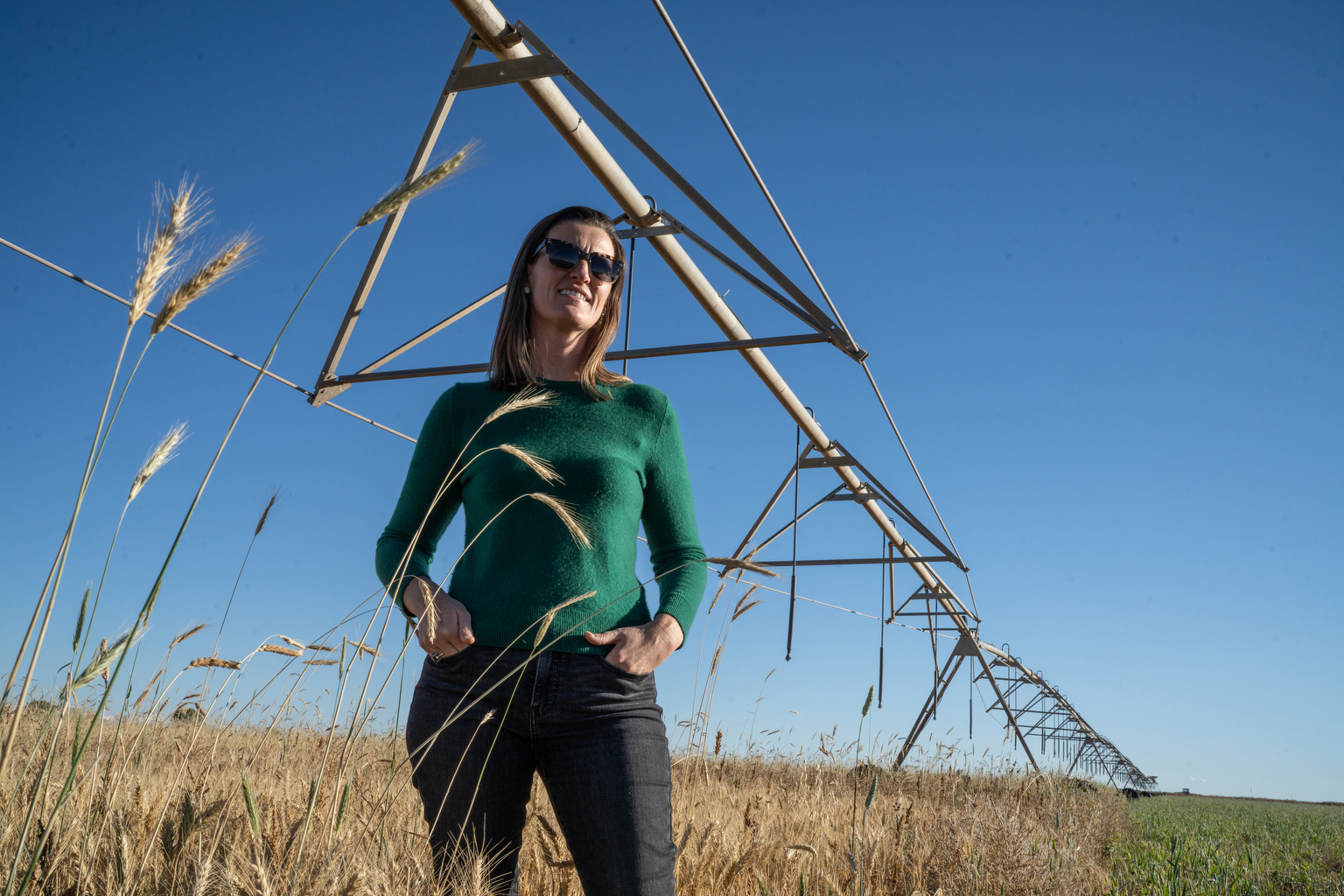

Farming in the San Luis Valley, Colorado, is tough. The 8,000-square-mile, high-altitude desert has one of the shortest growing seasons in the United States. It is known for strong winds, and in the increasingly common dust storms that plague the region, local farmer Sarah Jones has been unable to pick her children up from school. Two years ago, wind-driven dust so obscured drivers’ vision that it led to a 15-car pile-up on the highway.
“Over the last handful of years, the dustbowl-like events are getting worse and worse,” says Jones. “Last year, I got an emergency weather warning on my phone for the first time…It is not safe to drive. It is not safe to have the kids outside.”
The Valley’s economy relies heavily on agriculture—the region has consistently produced the second-highest yield of fresh potatoes in the U.S. But each dust storm removes precious topsoil from farmers’ fields and potentially damages crops. Jones says the solution is simple: plant more rye.
“We can literally prevent the dustbowl, overnight,” says Jones.
Jones co-founded the Rye Resurgence Project, an organization connecting rye growers in the San Luis Valley with buyers who are interested in its unique terroir—the combination of environmental factors that creates its distinct flavor. In 2024, farmers in the Valley planted 4,000 more acres of rye than the previous year, thanks in large part to these efforts.
Now, on a windy day in the off-season, Jones drives around the Valley surveying at fields. Many are left bare for the winter, with wind-blown soil reducing the visibility above them to zero. But just across the street, over a field planted with rye, the air is clear. The ground holds.
Jones is part of a growing movement of farmers and organizations across the U.S. that see rye as a powerful, low-tech climate solution, one that can pay farmers to build healthier soil, save water, sequester carbon and more. And scaling this solution could start with a simple ask from consumers: drink more whiskey distilled from U.S.-grown rye.
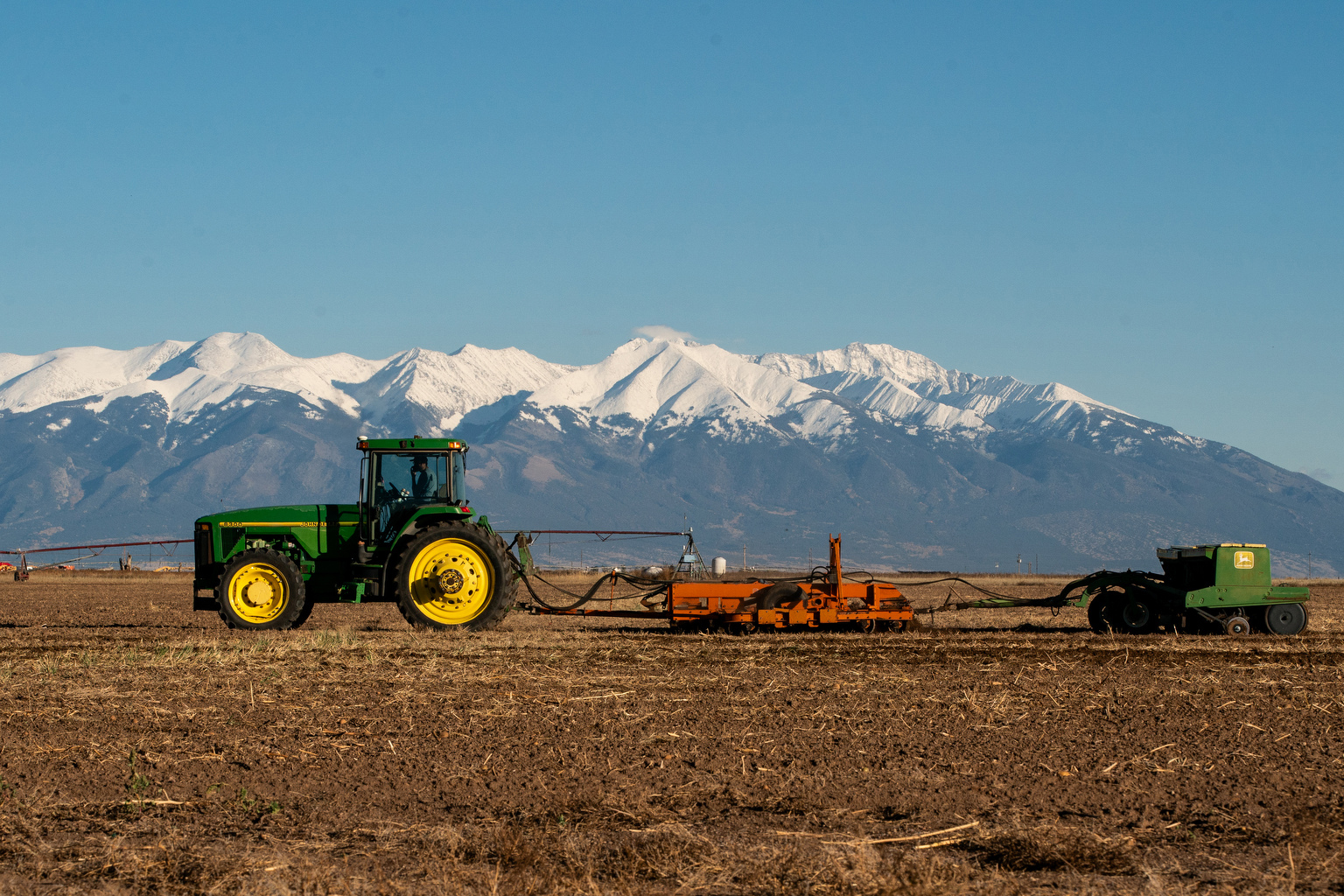 With the Sangre de Cristo mountains for a backdrop, Michael Jones plants rye seed at Jones Farm Organics in the San Luis Valley on Oct. 21, 2024. Credit: Hart Van Denburg/CPR News
Deep Roots, Big Returns
From 2009 to 2024, the USDA reported a 75 percent increase in acres of rye crop. But only about 18 percent of U.S. rye is harvested. Instead, it is grazed by livestock or kept in the ground to benefit soil that would otherwise be left bare.
Numerous studies show that this practice, called cover cropping, provides important ecosystem services, such as increasing water storage, preventing erosion, enhancing soil biology and suppressing weeds. Improved soil structure and increased soil organic matter create a sponge-like effect that absorbs and retains more water. Meanwhile, living roots and biomass on the field provide natural wind protection.
Rye can grow roots as deep as six feet,