


Shortly before taking office as the president of Argentina on Sunday, Javier Milei decided to squeeze in what he called a spiritual journey, flying to New York City to visit the tomb of influential Hasidic Jewish leader Menachem Mendel Schneerson, known to his followers simply as “the Rebbe.”
Wearing a black kippa and trailed by journalists, Milei prayed last month at the cemetery in Queens to give thanks for his good fortune before returning to lead a country that faces a dizzying economic crisis.
The most surprising part of this story is that Milei is not Jewish. He was raised Catholic.
His forays into Judaism — a religion that does not seek out converts — add to the unconventional persona of the far-right libertarian economist and former television pundit who rocked Argentina’s political establishment by harnessing anger about rising poverty and inflation that currently exceeds 140% a year.
A nonconformist who sports a moppy hairdo and speaks lovingly about his several cloned dogs, Milei, 53, pitched his campaign as a fight against the political elite, whom he dubbed “the caste,” and waved a chainsaw at rallies to symbolize his proposed budget cuts.
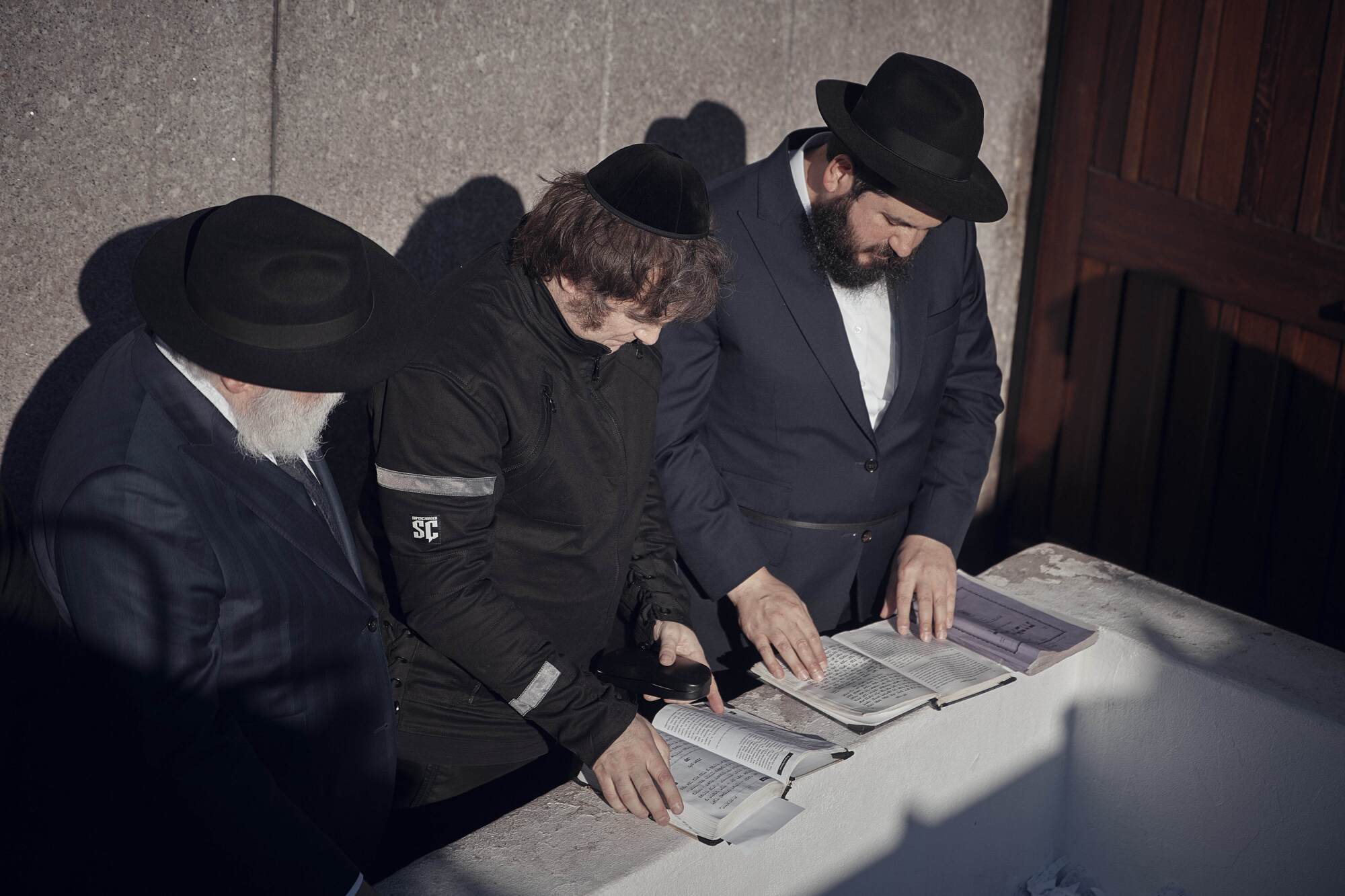
Milei, center, joins rabbis at the resting place of Chabad-Lubavitch leader Menachem Mendel Schneerson, known to his followers as “the Rebbe,” at the Montefiore Cemetery in New York.
(Andres Kudacki / Associated Press)
Despite such extreme stances as promising to dollarize the economy, calling the Argentine pope “deplorable” and suggesting that people be allowed to sell their bodily organs, Milei won 55% of the vote.
But perhaps the most unorthodox of his stances is his growing affinity for Orthodox Judaism in predominantly Catholic Argentina.
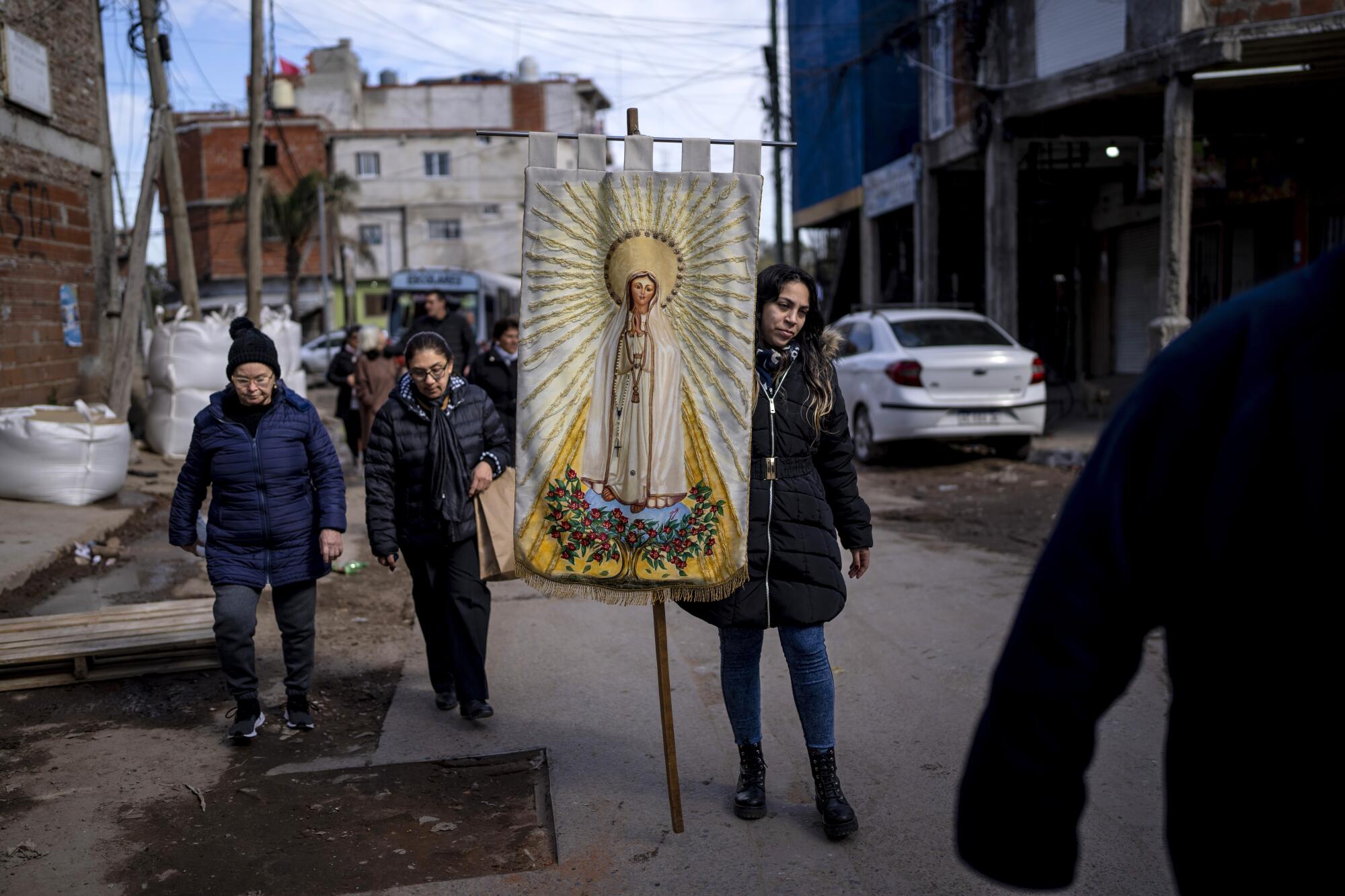
Catholics walk to attend a Mass in September in support of Pope Francis in response to Milei’s criticism of the Argentine pontiff in Buenos Aires.
(Rodrigo Abd / Associated Press)
In 2021, as Milei was launching his campaign for Congress, he was getting “stigmatized as a Nazi,” according to Julio Goldestein, a Jewish member of Milei’s campaign. The comparisons followed Milei saying in an interview about his opponents: “We don’t only beat them in productivity, we are morally superior, we are aesthetically superior, we are the best in everything, and that hurts them.”
Goldestein called Tommy Pener, director of Betar, a Jewish youth group in Argentina, to dispel such insinuations.
“Javier Milei is not an antisemite; not only that, he’s a good friend of the Jews,” Pener said Goldestein told him.
They organized a meeting at Acilba, a Moroccan Jewish community center in Buenos Aires, with about 100 youths “to show that what was being said was false,” Pener said. Milei and Waldo Wolff, a local Jewish congressman, led a talk about antisemitism and “the fight against totalitarianism.”