

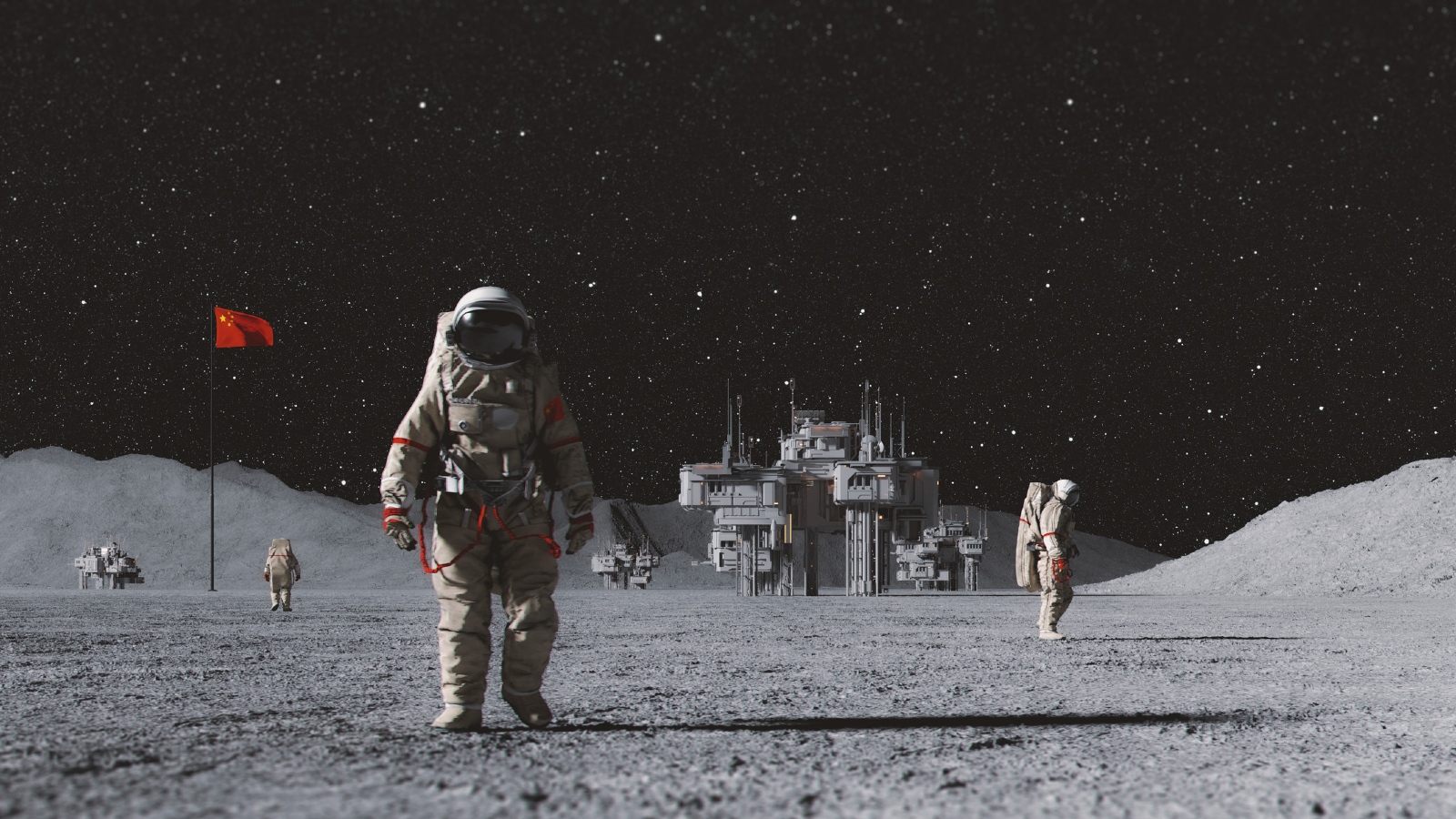

Russia’s space agency Roscosmos has unveiled a groundbreaking plan to collaborate with China in constructing an automated nuclear reactor on the moon by the year 2035. This innovative reactor will play a pivotal role in providing power to a proposed lunar base that will be jointly operated by the two nations.
The genesis of this ambitious project can be traced back to 2021 when Roscosmos and the China National Space Administration (CNSA) first unveiled their vision to establish a shared base on the moon known as the International Lunar Research Station (ILRS). The primary goal behind this initiative was to create a station that would be open to participation from various countries and international partners.
Despite the international nature of the ILRS, it is unlikely that NASA astronauts will have the opportunity to visit the base. This is due to strained historical relations between NASA and CNSA, as well as a recent fallout with Roscosmos. The latter is set to depart from the International Space Station in 2025 in response to sanctions imposed by the U.S. following Russia’s military intervention in Ukraine in February 2022.
In an official statement released on Tuesday (March 5), Roscosmos disclosed its intention to collaborate with CNSA in constructing a nuclear reactor that could potentially power the ILRS. The Director General of Roscosmos, Yury Borisov, outlined the timeline for this endeavor, aiming to deploy the power unit on the lunar surface between 2033 and 2035 in conjunction with Chinese partners.
Borisov emphasized the autonomous nature of the construction process, highlighting that it would ideally occur without human presence. He also noted that the requisite technological advancements required for this mission are on the brink of realization.
Moreover, Roscosmos is exploring the utilization of nuclear-powered rockets to transport cargo to the moon for the construction of the lunar base. However, the agency is still grappling with the challenge of ensuring the safe construction of these spacecraft, as reported by Reuters.
Looking ahead, the collaboration between Russia and China in establishing a nuclear reactor on the moon represents a significant leap in space exploration and could pave the way for future missions and scientific endeavors beyond Earth’s orbit.
Image: A futuristic representation of a nuclear reactor on the moon, with Earth in the background, showcasing the innovative strides being made in space technology and exploration.
Exclusive: Breakthrough Lunar Nuclear Reactor Designs Unveiled
In a groundbreaking development, British scientists have released blueprints for a compact lunar nuclear reactor that NASA may utilize for upcoming missions. The necessity of a nuclear reactor, or another reliable power source, to sustain potential lunar colonies has been underscored, as solar panels may be insufficient to generate and store adequate energy.
Notably, last September saw the introduction of plans for a diminutive nuclear reactor designed to operate on miniature seed-sized fuel cells, set to undergo testing by NASA for prospective space quests. The specifics regarding the size and configuration of the collaborative Russian-Chinese reactor remain ambiguous.
Contrasting Lunar Exploration Strategies
Russia’s state space corporation Roscosmos and the China National Space Administration (CNSA), both devoid of manned lunar expeditions, exhibit divergent recent lunar exploration histories. Russia witnessed a catastrophic conclusion to its first moon mission in nearly half a century when the Luna-25 lander crashed into the lunar surface, resulting in a sizable 33-foot wide crater.
Conversely, China’s CNSA has maintained a lunar presence since 2013, with the Chang’e 5 moon lander symbolically planting the Chinese flag on the moon’s terrain in 2020. This notable milestone signifies China’s progress in lunar exploration endeavors.
The Path Ahead
The joint endeavor between Russia and China to construct a shared nuclear reactor on the moon by 2035, without the involvement of human personnel, has far-reaching implications for future space undertakings. The potential ramifications and technological advancements stemming from this collaborative effort could transform the landscape of lunar missions and beyond. Stay tuned for further updates on this groundbreaking initiative.