


This content was originally created by National Geographic Traveller (UK).
A plethora of monkeys can be spotted all around, especially the Old World mona monkeys. These monkeys are approximately 11 pounds and appear to be impeccably groomed, as if they just stepped out of a salon. Their body fur is a shade of coffee brown, with bushy white tufts adorning their chipmunk-like cheeks. The monkeys closest to me seem to sniff the air, with masks of exposed skin around their eyes resembling miniature versions of famous outlaw Dick Turpin. Their behavior is reminiscent of highwaymen, being vigilant, always hungry, and equipped with slender fingers that seem capable of pickpocketing. I cannot shake off the suspicion that they are eyeing my lunch, ready to seize the opportunity for a theft.
Our guide, Jeremy, comments on the unique nature of the Mona monkeys, mentioning that they are one of the few species of monkeys found in the Caribbean. Observing them from a distance, perched on the treetops in their gang hideout, it is evident that they exude a sense of ownership over their territory. Spending a few moments watching them, one might feel as if they are the guardians of the rainforest, their tails swaying like batons as we attempt to uncover the mysteries of their natural habitat.
The Grenada adventure commences right from the start, especially during the country’s 50th anniversary of independence this year, following its liberation from British rule in February 1974. Five hundred years prior to that, Christopher Columbus caught a glimpse of Grenada while sailing from Sanlúcar, Spain, on his third expedition to conquer the New World. Though Columbus named the island Concepción, in honor of the Immaculate Conception of Mary, mother of Jesus, he never actually set foot on its shores. In contrast, my arrival near the tranquil waves of Grand Anse Beach, via a straightforward minibus ride from the airport, is far less eventful.
Among the islands within the Lesser Antilles, Grenada often gets overshadowed by more popular destinations such as St Lucia, Barbados, Antigua, and the Virgin Islands. This underappreciated gem at the southernmost tip of the Caribbean is predominantly reliant on agriculture and the cultivation of export crops like nutmeg and mace, rather than mass tourism. This aspect adds to the country’s authenticity, making it an enticing destination to explore.
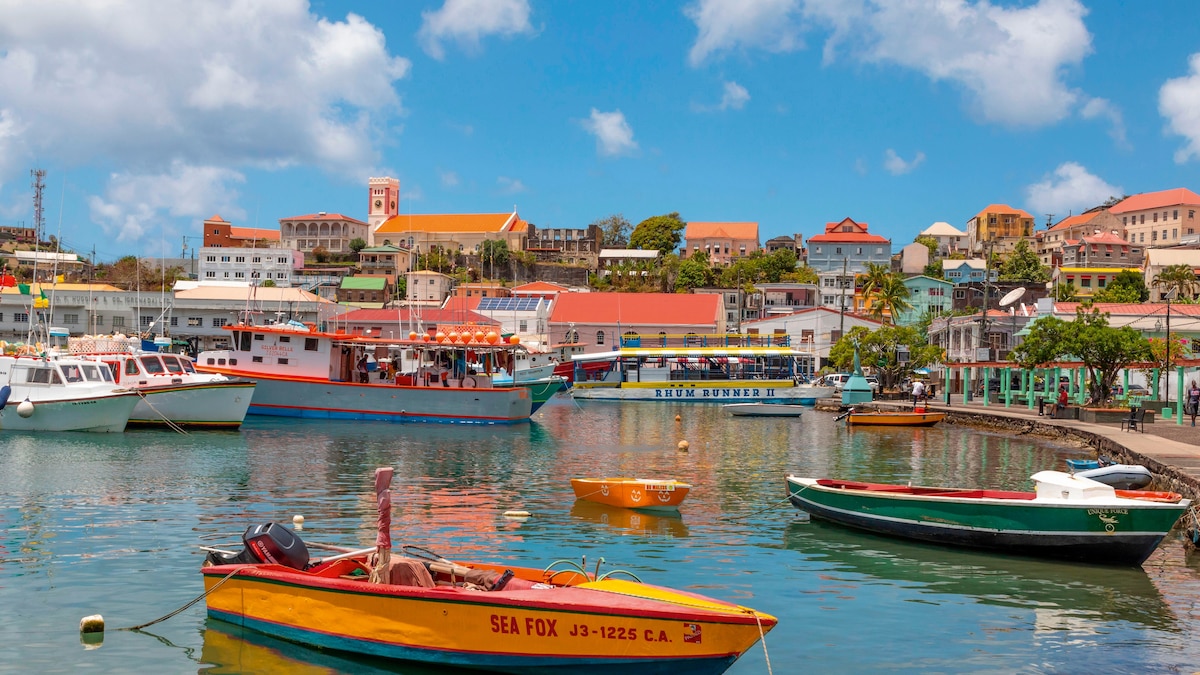
Our journey kicks off with a visit to Grand Etang National Park, traversing the meandering asphalt roads that lead us into the island’s volcanic interior and undulating hills. In the enchanting morning light of St George’s, the island’s capital, the sun breaks through the clouds above the ancient walls of Fort George, setting the tone for the day ahead. The rainforest surrounding us is dense with lush, dark green foliage, creating a wild and untamed atmosphere as we leave the city behind and make our way towards the mountainous terrain, where towering bamboo casts shadows against the clear blue sky.