


Climate and energy ministers from G7 nations agreed a coal exit deadline – with a caveat, but made little progress on other fossil fuels and finance
When UN climate chief Simon Stiell addressed climate and energy ministers from the G7 group of rich nations on Monday, he issued a frank message: “It is utter nonsense to claim the G7 cannot – or should not – lead the way on bolder climate actions”.
He added those countries should be “leading from the front” through much deeper emissions cuts and bigger and better climate finance.
A day later, the gathering of the most powerful industrialised democracies responded with a tepid outcome, serving up a new commitment on ending coal power generation – weakened by a loophole in the language – a rehash of previous pledges and nothing new on climate finance, this year’s top priority in climate diplomacy.
For the first time, G7 countries all agreed to end the use of coal power generation in their energy systems “during the first half of the 2030s”.
While most members of the bloc are already planning to phase out coal before 2035, the commitment marks a step forward for Japan, analysts said. The Asian nation generates over a quarter of its energy from coal and, alongside Germany and the United States, had previously blocked international efforts towards setting a target date to shut down coal power plants.
Germany has written into its legislation a final target to exit coal by 2038 at the latest, but the government now intends to pull that forward to 2030. The United States unveiled new regulations last week under which coal plants planning to stay open beyond 2039 will have to cut or capture 90 percent of their carbon dioxide (CO2) emissions by 2032.
Not enough
But the G7 coal-power agreement struck on Tuesday in Turin, Italy, comes with a caveat that gives countries an alternative choice to phase out coal “in a timeline consistent with keeping a limit of 1.5°C temperature rise within reach, in line with countries’ net-zero pathways”.
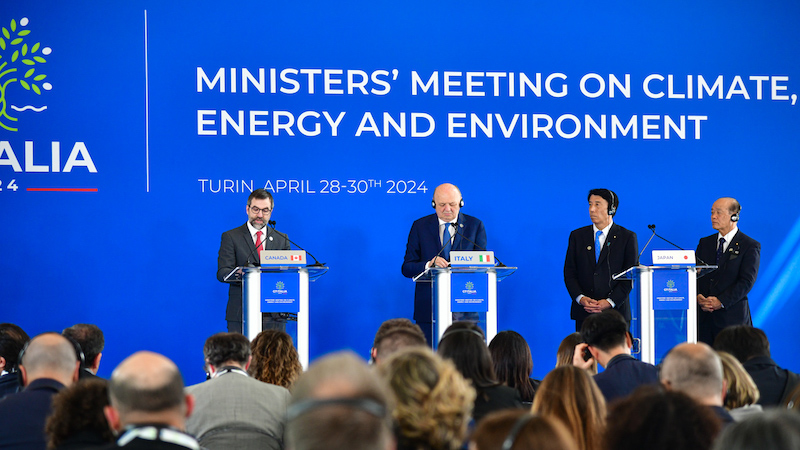
Gilberto Pichetto Fratin, Italy’s minister for environment and energy security, told journalists at the end of the summit that the text “for the very first time uses a deadline, wherever possible”.
“G7 countries undertake to phase out the use of coal without jeopardising the various countries’ economic and social equilibrium,” he added.
Researchers say that, even if countries do stick to the mid-2030s deadline, it will not be enough to limit global warming in line with the goals of the 2015 Paris Agreement.
G7 countries need to phase out coal from power generation by 2030 at the latest, and gas by 2035, according to a recent analysis done by Berlin-based policy institute Climate Analytics.
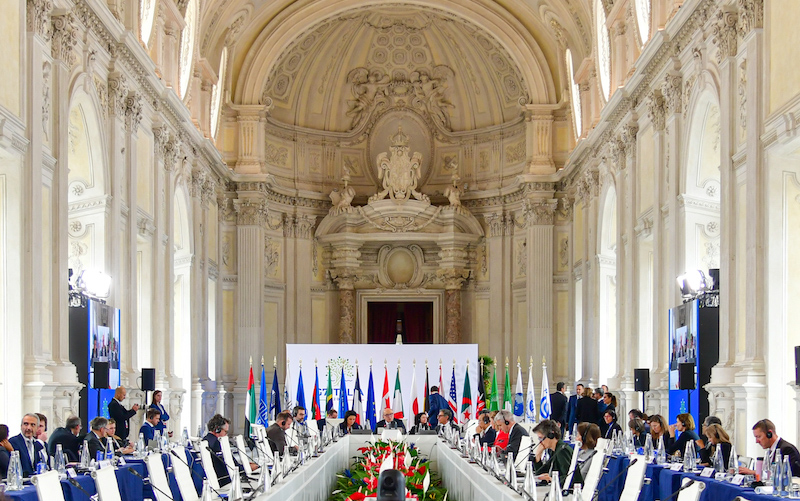
G7 climate and energy ministers meet at the Reggia di Venaria Reale in Italy. Photo: G7 Italy
“It’s notable that gas has not been mentioned [in the G7 ministerial agreement],” said Jane Ellis,