


One insect has led to a cascade of serious consequences.
By
|
Published Jan 25, 2024 2:00 PM EST
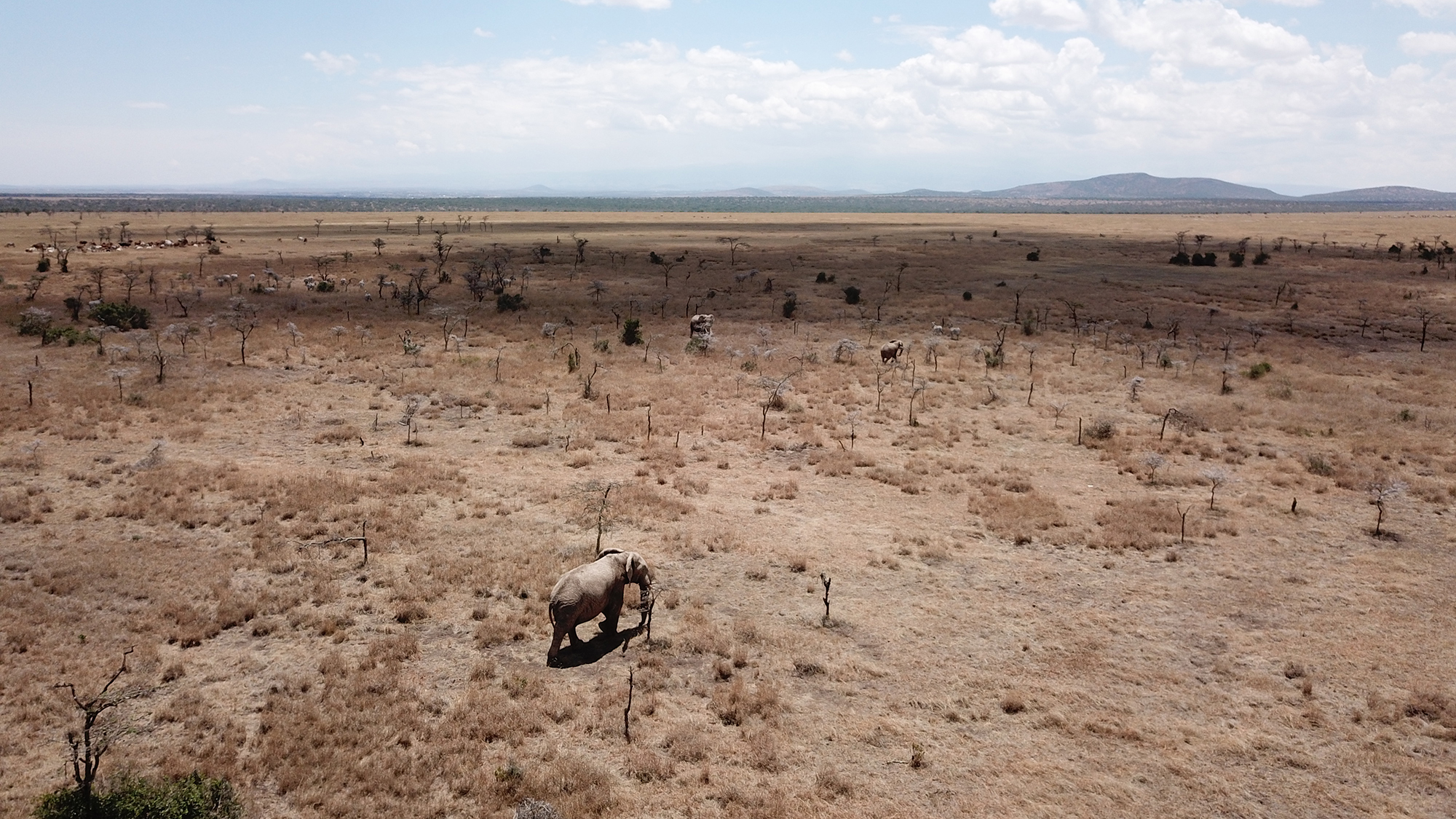
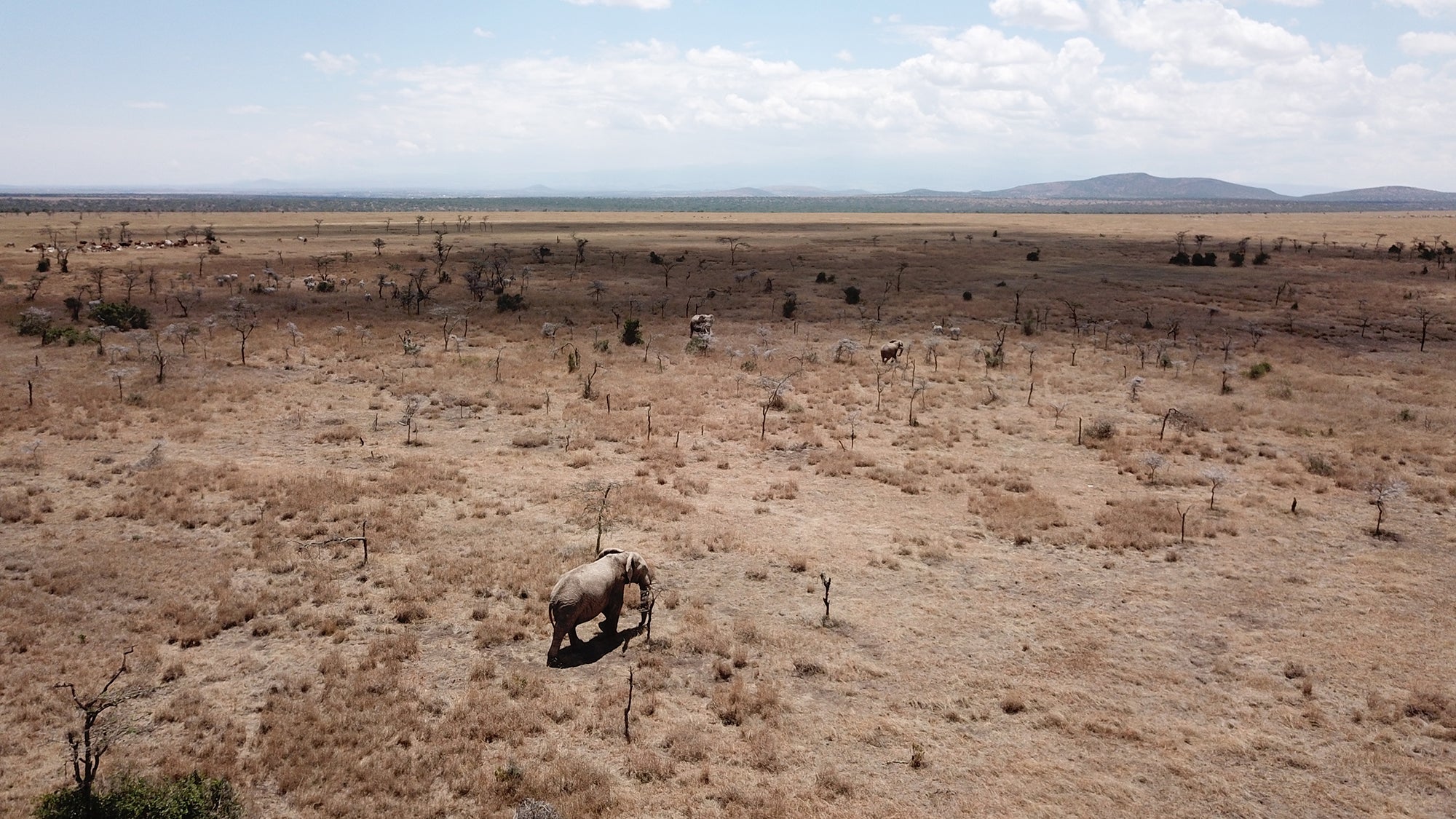
Elephants navigate a landscape invaded by big-headed ants at Ol Pejeta Conservancy in Laikipia, Kenya. Following invasion by big-headed ants, whistling-thorn trees are rendered vulnerable to elephants, whose browsing and breaking of trees promotes savanna openness. Brandon Hays
SHARE
Lions, elephants, zebras, buffalo, ants, and trees are all locked in an intricate ecological web in one Kenyan nature preserve. But that web is unraveling as a small invader disrupts the natural balance of things, according to a study published January 24 in the journal Science.
The spread of an invasive insect across the savannah habitat of Ol Pejeta Conservancy has triggered a domino effect. The fallout leaves lions less able to hunt zebras–their primary prey– and has prompted the big cats to pursue larger and potentially more dangerous buffalo, says Todd Palmer, one of the study authors and a biology professor at the University of Florida. Other major ecosystem shifts, like loss of bird habitat and declining soil health, are likely also occurring.
The new research builds on past work to demonstrate just how delicate and complex the savannah ecosystem is. More broadly, it shows how important mutualisms (mutually beneficial relationships between species) can be in habitats around the world. When the connections between organisms are disrupted, it can have serious conservation consequences.
A changing landscape
It all starts with a well-documented symbiosis between whistling-thorn acacia trees, which are the most common woody plant in Ol Pejeta, and native acacia ants. The trees provide the ants with habitat and nectar to eat. In return, the ants protect the trees from would-be megaherbivores, like elephants, with their nasty bites. This relationship is considered a foundational one: a mutualism that shapes the landscape by allowing acacia trees to thrive amid many large plant-hungry animals– but it’s in peril.
Big-headed ants, an aggressive and predatory invasive species, are destabilizing that foundation by displacing the native acacia ants. When big-headed ants come to an acacia ant nest, they wreak havoc–killing and eliminating their native competition. And unlike their native counterparts, big-headed ants do nothing to defend acacias. As a result, elephants and other herbivores more easily graze on the trees, leaving few trunks left in areas colonized by the big-headed ants. A savannah invaded by big-headed ants is a much more open habitat, largely devoid of brush and woodland.
 Big-headed ants kill native Crematogaster spp ants and eat their eggs, larvae, and pupae. Unlike Crematogaster spp, however, big-headed ants live underground, and do not defend trees against elephants and other herbivores. » …
Read More rnrn