


The Forgotten Animals: Why Non-Charismatic Species Need Our Attention
The plants and animals living in critical swampland or dwelling in dark caves can often get left behind by conservation efforts. Humans generally consider these organisms as less charismatic than other species that benefit from large awareness campaigns.
[Related: Wetlands lose some environmental protections in new Supreme Court ruling.]
“When we generally talk about charismatic animals, we think of the poster children, so to say. Pandas, tigers, elephants, usually large mammals,” Christina Biggs, a biologist from conservation foundation Re:wild, tells PopSci.
Focusing on the ‘under frogs’
Earth is facing a sixth wave of mass extinction that threatens all walks of life, charismatic or not. To help save them, Biggs is the lost species manager for Re:wild’s Search for Lost Species project, an initiative that is looking for 2,200 lost species across 160 countries. Since 2017, it has documented 12 of their 25 most wanted lost species. It’s timely work, as over 20 species were removed from the endangered species list due to extinction last year.
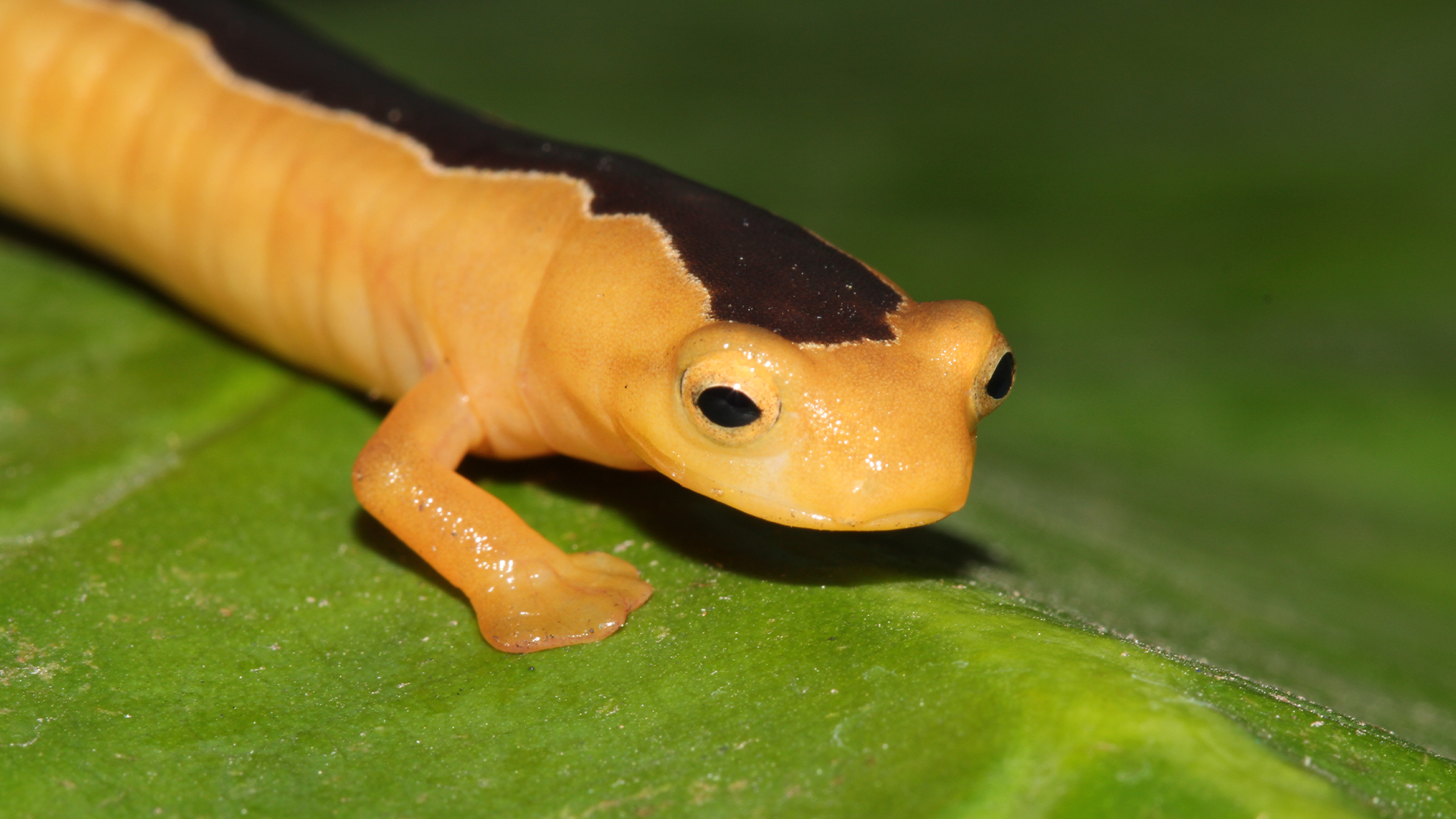
“We tend to focus on what we call the ‘under frogs,’ the things that are not as commonly studied,” says Biggs. “Everything that lives in an ecosystem is charismatic and plays a role that then supports the health of that entire area.”
 Male and female Voeltzkow’s Chameleon. CREDIT: Frank Glaw
These smaller, slimy, scaly, or scary creatures often don’t get the same amount of conservation attention and care from humans. Our species has an evolutionary bias to fear many of them for our own safety. These organisms then don’t get the same levels of awareness that they deserve or need, and that attention is critical for rediscovering lost or extinct species. Originally a marine biologist, Biggs admits that she has had to overcome her own biases when asked to crawl into caves in Madagascar and look at some of the animals living there.
“You then stop and apply logic, and you think that’s why I’m here. I’m here to do these discoveries,” says Biggs.
 Western fence lizards are found throughout the western United States and Mexico. Habitat loss from urbanization and the urban heat island effect has reduced the number of scales they have over time. CREDIT: Deposit Photos.
Losing more than we are rediscovering
Biggs is a co-author of a study published January 17 in the journal Global Change Biology compiled a catalog of tetrapods–animals with four limbs–that were once considered lost to science, but were later rediscovered. Scientists consider a species lost if they have not been observed in the wild for over 10 years despite being searched for by scientists and citizen scientists alike. A rediscovered species is one that has been lost for at least a decade before being found. These rediscoveries sometimes happen by accident, such as the pygmy blue-tongue lizard,