


Dilya-eje, a secondary school teacher in the border village of Samarkandek, Kyrgyzstan, frequently goes house to house in her neighborhood to identify the children who should be attending school the following year. She diligently records the status of their parents in her notebook, with over half of them being labeled as migrants.
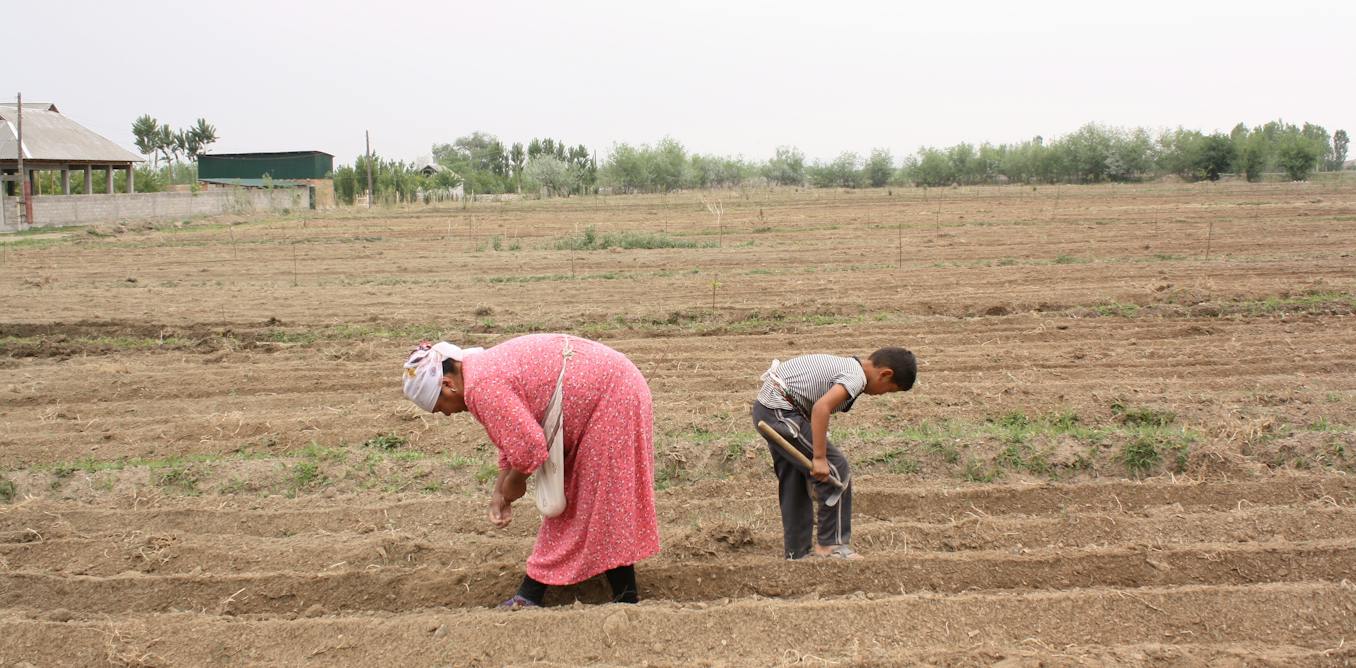
As men migrate, women take on traditional male roles, with the majority of agricultural labor in the villages now being performed by women. However, a significant number of women also migrate from Kyrgyzstan. In 2016, women made up about 40% of the total Kyrgyz migrants working in Russia. These women work in various sectors, and some are even young girls who start earning money right after high school. It’s a major shift in gender roles, but these women often face misogynistic behavior and violence despite being the primary income generators for their families.
Labour migration always involves a trade-off between economic benefits and social consequences. According to a 2016 United Nations Population Fund (UNFPA) survey in Kyrgyzstan, returning migrant women encounter deep-seated contempt at home. The survey revealed that more than half of the respondents believe that a “wife’s career is less important than her husband’s”, and a significant portion also believes that “a woman’s work has a negative impact on family and children.”
Women coming back from labor migration also encounter difficulties reintegrating into their families and may experience alienation from their children. Despite these challenges, these women play a significant role in contributing to the country’s economy, with migrants from Kyrgyzstan transferring an average annual amount of a third of the country’s GDP between 2012 and 2014.
Despite the negative perceptions of women’s labor migration, it provides many women with financial independence and an opportunity to make their own choices about their lives, something that is often not possible in traditional rural patriarchal communities. Labor migration also provides them with much-needed socialization and experience.
The transformation of gender relations in modern Kyrgyz society due to migration is a complex interplay of various factors, including the resurgence of Islam, capitalism, and the legacy of Soviet-era emancipation of women. This has significant implications for the formation of a new national identity that’s still evolving in Kyrgyzstan today.
For more information, read the full article here.
You can also find the full source at the following link.