

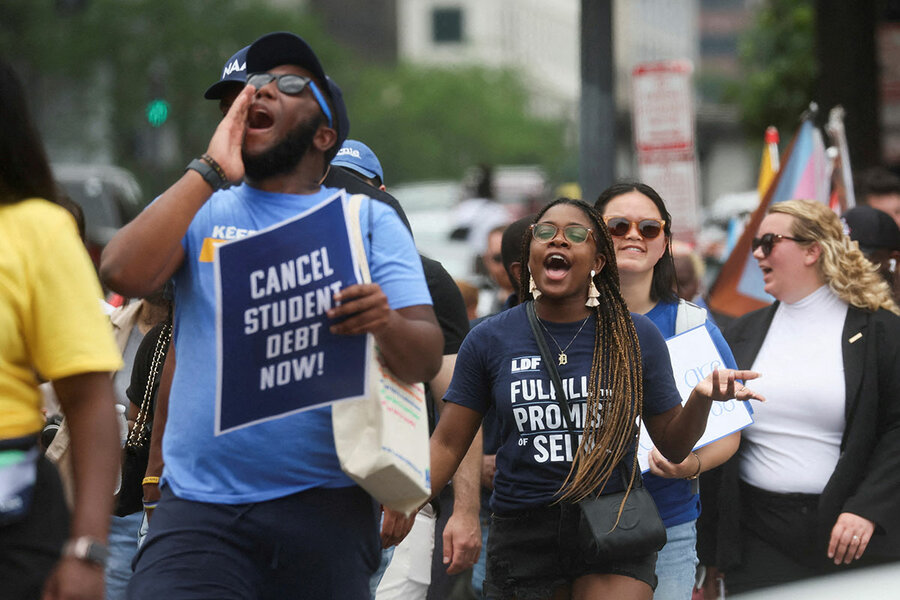

A week ago, 74,000 Americans received some unexpected news: Their student loans – totaling nearly $5 billion – had been forgiven by the White House. Some 44,000 of those people were police officers, nurses, and firefighters, entitled to relief after 10 years of public service.
As of this month, the Biden-Harris administration says, it has approved $137 billion in loan forgiveness for more than 3.7 million people. Starting next month, enhancements to a program launched in August will go into effect and will have an impact on almost 7 million additional people. While that’s still far short of the number covered under President Joe Biden’s initial $430 billion loan forgiveness plan, supporters say it is the most generous plan implemented to date.
“I would say it is one of the signature accomplishments of the Biden-Harris administration in terms of higher education affordability,” says Sara Partridge, a senior policy analyst for the Center for American Progress. These repayment plans “can be a little wonky and complicated, so I think what’s really major about it can be lost in the details,” Dr. Partridge adds.
Why We Wrote This
The Biden administration is forgiving the college debt of thousands of Americans, including nurses and firefighters. What does the latest plan entail?
Didn’t the Supreme Court kill student loan relief? What happened?
President Biden campaigned on a broad promise of student debt relief for millions of Americans. His administration offered $10,000 per borrower in debt forgiveness, plus an additional $10,000 for those with lower incomes. The Supreme Court of the United States struck down that program in 2023. The justices ruled that the secretary of education did not have authority under the pandemic-era HEROES Act to cancel student loan debt and that “the economic and political significance of the secretary’s action is staggering by any measure.”
The Biden-Harris administration then pivoted to enhancing existing loan forgiveness programs.