

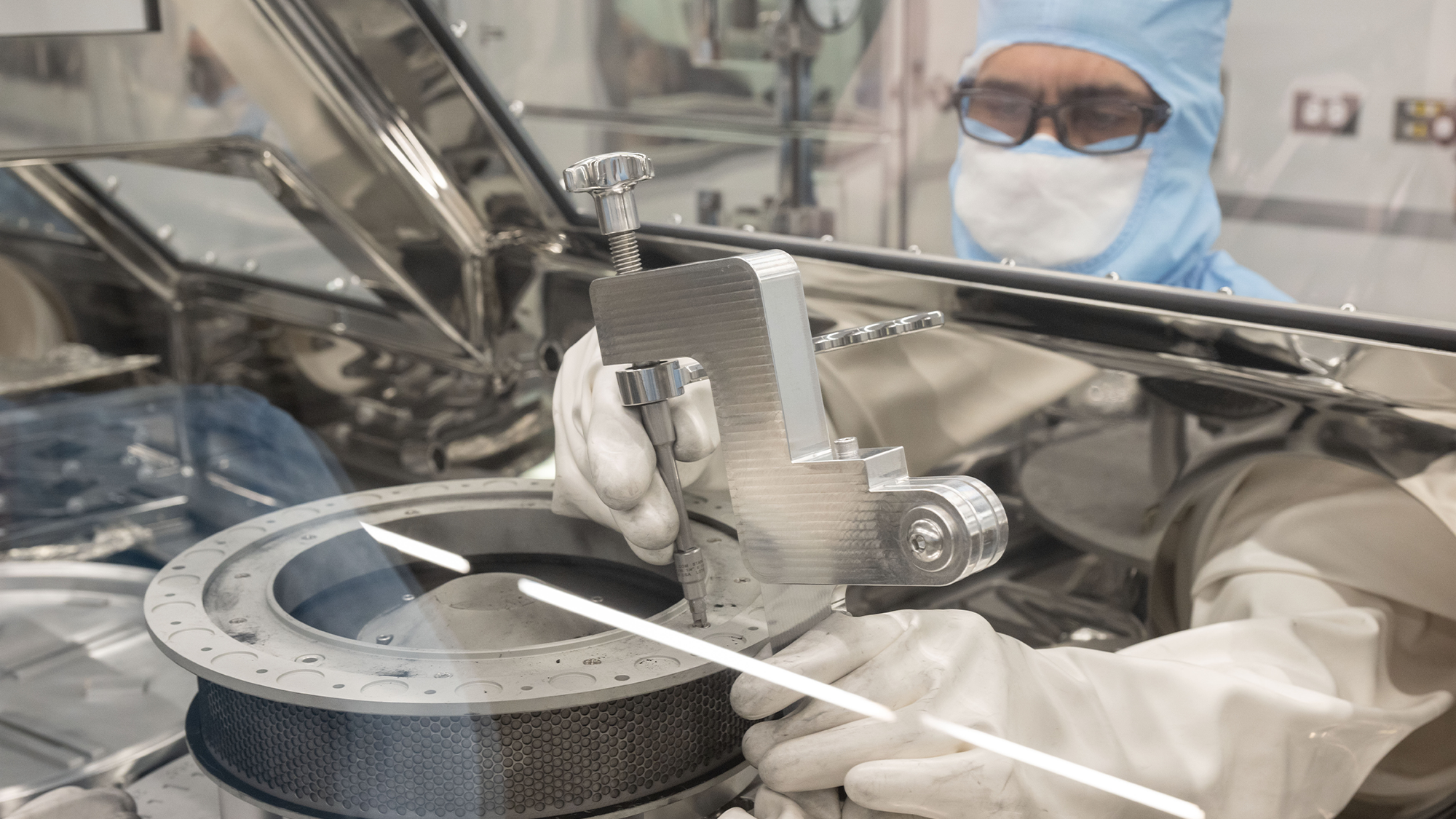

Even the brilliant minds at NASA sometimes have trouble opening up a tightly-sealed container. Engineers and scientists from Johnson Space Center osiris-rex/2024/01/11/nasas-osiris-rex-team-clears-hurdle-to-access-remaining-bennu-sample/” rel=”noopener”>have finally managed to open a container of asteroid sample material, after two fasteners had been stuck for about 3.5 months.
[Related: NASA’s OSIRIS mission delivered asteroid samples to Earth.]
On September 24, 2023, the agency received roughly 2.5 ounces of rocks and dust collected from a 4.5 billion year-old near-Earth asteroid named Bennu. The regolith was dropped off by OSIRIS-REx in a Utah desert. This is the first United States mission to collect samples from an asteroid. The spacecraft traveled 1.4-billion-miles from Earth, to the asteroid Bennu, and then back again to drop off the asteroid dust. However, NASA announced in October that some of the material was out of reach in a capsule inside a robotic arm with a storage container called the Touch-and-Go Sample Acquisition Mechanism (TAGSAM).
The asteroid samples must be analyzed in a specialized glovebox with a flow of nitrogen to prevent them from becoming contaminated. According to NASA, 35 fasteners were holding the sampler shut and two of the fasteners were too difficult to open with any of the pre-approved ways to access containers of such precious samples. They initially managed to collect some black dust and debris l from the TAGSAM head when the aluminum head was first removed and could access some of the material from inside the canister with tweezers or a scoop, while the TAGSAM head’s mylar flap was held down.
To pry open the stuck fasteners, NASA needed to develop new materials and specialized tools that minimize the risk that the precious space rock samples will be damaged or contaminated. These new tools include custom-fabricated bits built from a specific grade of surgical, non-magnetic stainless steel. This is the hardest metal approved for use in the container’s pristine curation gloveboxes. These techniques enabled the team to open the stuck fasteners.
“In addition to the design challenge of being limited to curation-approved materials to protect the scientific value of the asteroid sample, these new tools also needed to function within the tightly-confined space of the glovebox, limiting their height, weight, and potential arc movement,” Johnson Space Center OSIRIS-REx curator Nicole Lunning stated in a press release. “The curation team showed impressive resilience and did incredible work to get these stubborn fasteners off the TAGSAM head so we can continue disassembly. We are overjoyed with the success.”
After a few additional disassembly steps, the remainder of the sample will be fully visible. Image specialists will be able to take ultra-high-resolution pictures of the sample while it is still inside TAGSAM’s head. After imaging, this portion of the sample will be removed, weighed, and the team will determine the total mass of the asteroid material captured by the mission.
Bennu dates back to the crucial first 10 million years of the solar system’s development.