

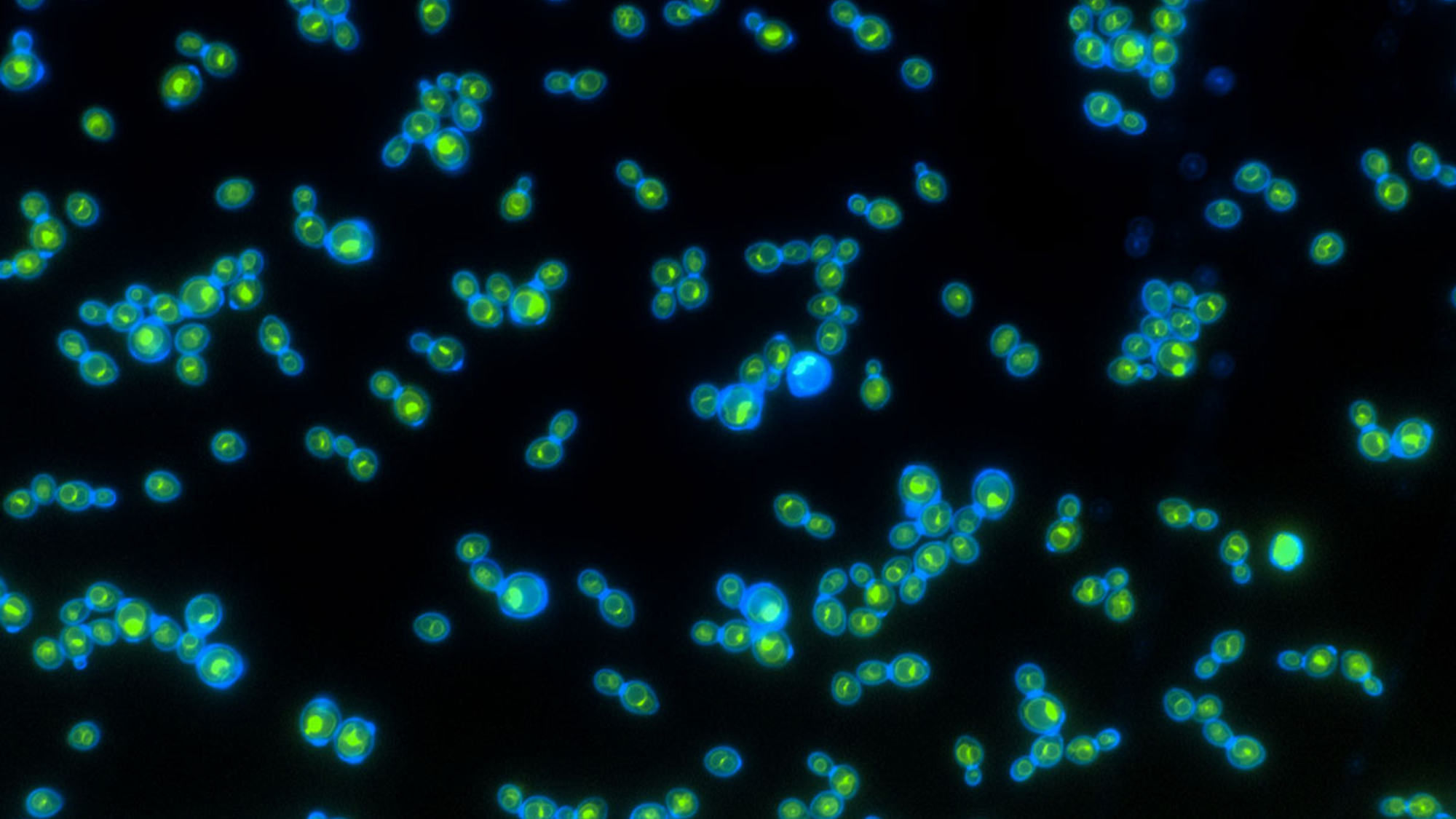

Yeast is a fascinating fungi that transforms carbohydrates into ingredients for beer or bread through a process called fermentation. However, it typically doesn’t do well in the light. But a group of scientists has engineered a strain of yeast that might actually work better with light and could boost the evolutionary potential of these fungi in a simple way. The study about this groundbreaking finding was published on January 12 in the journal Current Biology.
“We were frankly shocked by how simple it was to turn the yeast into phototrophs (organisms that can harness and use energy from light),” stated study co-author Anthony Burnetti, a cellular biologist at the Georgia Institute of Technology. He added, “All we needed to do was move a single gene, and they grew 2 percent faster in the light than in the dark. Without any fine-tuning or careful coaxing, it just worked.”
Giving yeast a trait as evolutionarily important as the capability to harness light may allow us to understand how phototropism emerged and can be used to study evolution and biofuel production, as well as how cells age.
Earlier work by this research group on the evolution of multicellular life inspired this new study. In 2023, the group uncovered how a single-celled model organism called snowflake yeast could evolve multicellularity over 3,000 generations. They were, however, limited by a lack of energy.
Light is important for organisms to get an energy boost without oxygen. However, from an evolutionary standpoint, an organism’s ability to turn light into usable energy is complicated. The molecular machinery that allows plants to use light for energy requires numerous proteins and genes that are difficult to synthesize and transfer into other organisms. This is difficult in the lab and through natural processes like evolution.
Plants are not the only organisms that can transform light into energy. Some organisms can also use light with the help of rhodopsins, proteins that can convert light into energy without needing extra cellular machinery. Rhodopsins are found all over the tree of life and are acquired by organisms obtaining genes from each other over evolutionary times, according to Georgia Tech Ph.D. student Autumn Peterson.
A genetic exchange like this is called a horizontal gene transfer.